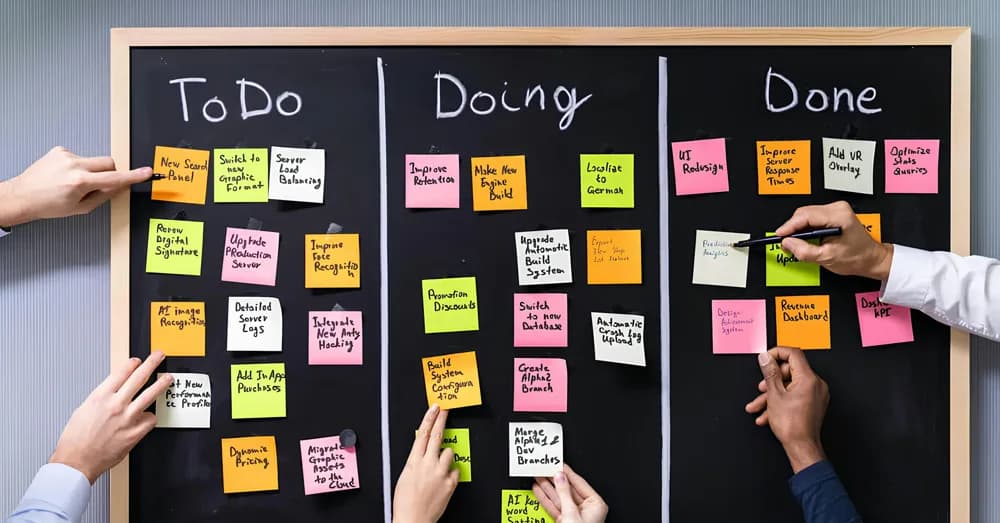
The role of the Scrum Master is evolving rapidly as we approach 2026. Once primarily associated with software teams, Scrum Masters are now in high demand across industries, from data science & AI engineering to marketing as organizations embrace Agile methods to navigate fast-paced, tech-driven markets. In fact, the need for agile project leaders is surging; the Project Management Institute forecasts 25 million new project management roles by 2030 , and Scrum Masters are at the forefront of this growth. Companies recognize that effective Scrum Masters drive productivity, foster innovation, and help teams adapt to new challenges. Refonte Learning’s own research shows that by 2026, top Scrum Masters can command senior salaries of $160,000+ and that demand for agile leadership skills is “skyrocketing” . Clearly, now is the time for aspiring and current Scrum Masters to understand the trends shaping their profession and the skills needed to stay ahead.
Why Scrum Masters Remain in High Demand in 2026
Scrum Masters play a pivotal role in today’s Agile and fast-paced projects. They are much more than meeting facilitators, they are servant leaders who remove impediments, coach teams in Agile principles, and act as the glue holding cross-functional teams together. Organizations have learned that without strong Scrum Masters, even the best technical teams can falter. This is especially true as projects grow more complex (think AI initiatives or global digital transformations) and teams become more interdisciplinary.
Several factors explain the high demand for Scrum Masters in 2026:
Agile Adoption is Ubiquitous: Around 66% of organizations now use Scrum or other Agile frameworks, not just in software but in finance, healthcare, and beyond. Agile’s prevalence means Scrum Masters are needed in virtually every sector to guide these practices. Even traditionally non-tech teams have embraced Scrum to manage work incrementally and respond to change. The expansion of Agile into areas like data science & AI engineering in 2026 further broadens the need for skilled Scrum Masters who can tailor Agile processes to new domains.
Proven Impact on Delivery: Companies see tangible benefits from having a competent Scrum Master. By enforcing focus and continuous improvement, Scrum Masters help teams deliver faster and smarter. For example, adopting Scrum at scale has enabled some organizations to achieve 5–10× faster delivery, cutting time-to-market from months to weeks. These results translate to competitive advantage, which is why agile experts are valued so highly. As one report notes, a Certified Scrum Master “empowers teams, eliminates roadblocks, and ensures faster, high-quality product delivery,” thereby driving business value .
Leadership in Digital Transformation: The ongoing digital and AI revolution has every company striving to become more adaptive. Scrum Masters, with their focus on adaptability and team empowerment, are critical leaders in digital transformation efforts. They help integrate new technologies (AI, cloud, etc.) into workflows by ensuring teams remain collaborative and focused on delivering incremental value. In domains like data science & AI engineering, where projects can be exploratory, a Scrum Master provides much-needed structure and iteration to ensure progress without stifling innovation.
Talent Shortage & Salary Growth: There’s a notable shortage of professionals with strong Agile leadership skills. The job growth for Scrum Masters is projected to increase by 24% by 2026, reflecting a promising future scope for this career. Companies are willing to pay top dollar for experienced Scrum Masters who can lead teams to success. Salary surveys for 2025 showed mid-level Scrum Masters easily earning in the six figures, and projections for 2026 indicate even higher ranges for senior roles (often well into $140k–$160k+). Simply put, organizations see Scrum Masters as mission-critical, and they’re compensating accordingly.
Top Trends Shaping the Scrum Master Role in 2026
The Scrum Master role in 2026 is not static, it’s adapting to new trends in technology and work culture. Below are five key trends every Scrum Master should watch and embrace:
AI and Automation in Agile: Artificial intelligence is making its way into project management. Scrum Masters are leveraging AI-powered tools for insights for example, using machine learning to predict sprint velocities or identify risk areas in backlogs. Rather than replacing Scrum Masters, these tools augment their decision-making. In 2026, successful Scrum Masters understand how to integrate AI analytics (like team productivity dashboards or automated burndown charts) to facilitate smarter planning and retrospectives. They also oversee ethical AI use in projects, ensuring that data-driven decisions don’t override team judgement and customer focus.
Scaled Agile Frameworks Going Mainstream: As companies undertake large, complex initiatives, knowledge of scaling frameworks (SAFe, LeSS, Nexus, etc.) has become a must. By 2026, it’s common for an enterprise to have 10+ Scrum teams working on interconnected products. Frameworks like SAFe (Scaled Agile Framework) are widely adopted over 70% of Fortune 100 companies use SAFe for Agile at scale. This trend means Scrum Masters are often operating not just at the team level but coordinating across teams as part of an Agile Release Train or similar structure. Trained professionals in SAFe and other scale frameworks are in high demand , as they can align multiple teams with strategic goals while avoiding “agile chaos.” Scrum Masters with scaling expertise can step into roles like Release Train Engineer or Agile Coach, orchestrating agile execution at the program or enterprise level.
Remote and Hybrid Team Facilitation: The post-2020 normalization of remote work has forever changed how teams operate. In 2026, many Scrum Masters lead distributed teams spread across cities or continents. This trend forces Scrum Masters to become experts in remote facilitation, running effective virtual daily scrums, sprint reviews, and retrospectives using collaboration tools. They must foster team cohesion without the benefit of in-person cues, often by leveraging video conferencing, digital whiteboards, and asynchronous communication channels. An important skill here is keeping remote team members engaged and ensuring everyone’s voice is heard despite time zone differences. Scrum Masters who excel in a hybrid environment help companies tap global talent while maintaining an Agile culture. (Notably, Refonte Learning reports that remote-first Agile teams can perform on par with co-located teams when guided by skilled Scrum Masters adept at digital collaboration.)
Scrum Master to Agile Coach: Expanding Responsibilities: Another trend is the evolution of the Scrum Master into more of an Agile coach or multi-team mentor. Organizations are asking Scrum Masters to not only manage the Scrum process for one team, but also to evangelize Agile values across departments. By 2026, many experienced Scrum Masters act as Agile Coaches, guiding multiple teams or advising management on agile adoption. This shift means honing skills in change management, coaching at the individual level, and even consulting leadership on agility. The Scrum Master’s soft skills, coaching, teaching, conflict resolution are more critical than ever. Effective Scrum Masters cultivate a continuous improvement culture beyond their immediate team. They mentor new Scrum Masters, contribute to Communities of Practice, and ensure that agility doesn’t stall at the team level but permeates the organization’s mindset.
Continuous Learning and Cross-Skilling: The rapid changes in tech and business require Scrum Masters to be lifelong learners. In 2026, the best Scrum Masters are those who continuously upskill, obtaining new certifications, learning about DevOps, UX, or data analytics, anything that helps them understand their team’s work better. This trend of cross-skilling ensures Scrum Masters can communicate with specialists (whether a cloud engineer or data scientist) and grasp project challenges in context. For example, a Scrum Master with some knowledge of data science & AI can better facilitate a machine learning team’s sprint planning, since they understand concepts like model training or data pipeline dependencies. Likewise, many Scrum Masters are adding PMP or Lean Six Sigma knowledge to blend Agile with traditional project management when needed (creating a “hybrid” skill set). The bottom line is, in 2026 the Scrum Master who stagnates will be left behind adaptability and learning agility have become key professional traits. Refonte Learning often stresses that effective Scrum Masters are “lifelong learners and teachers,” continuously sharing knowledge and improving themselves along with their teams.
Essential Skills and Strategies for 2026 Scrum Masters
Given the above trends, what skills and strategies should Scrum Masters focus on to thrive in 2026? Here are some crucial ones:
Technical Acumen (Domain Knowledge): While a Scrum Master is not required to code or build AI models, having a baseline understanding of the team’s domain greatly enhances credibility and effectiveness. In 2026, a Scrum Master working with a data science & AI engineering team should know the basics of model development cycles and data pipelines. Similarly, those in DevOps or cloud projects benefit from understanding CI/CD and cloud infrastructure concepts. This knowledge helps in facilitating discussions, identifying blockers, and communicating with stakeholders. It also enables the Scrum Master to challenge estimates or assumptions appropriately. Importantly, technical acumen extends to tools, familiarity with popular Agile tools (Jira, Trello, Azure DevOps) and emerging AI-driven project management software is expected.
Advanced Facilitation & Communication: The core of the Scrum Master role remains exceptional communication and facilitation skills. In 2026, with diverse and distributed teams, a Scrum Master must excel at leading engaging meetings (both in-person and virtual). They need to create an inclusive environment where team members, regardless of background or location, feel comfortable voicing concerns. Techniques like liberating structures for retrospectives, or using digital whiteboards for sprint planning, can make a huge difference. Additionally, Scrum Masters should be skilled at communicating with executive stakeholders, translating the team’s progress or impediments into business terms. Clarity, empathy, and the ability to listen are key. Refonte Learning emphasizes simulation of real-world Scrum ceremonies in training, underlining how vital skilled facilitation is to successful outcomes.
Mentoring and Coaching Mindset: As the role expands towards Agile coaching, Scrum Masters should strengthen their one-on-one mentoring abilities. This means not only coaching the team as a whole on Agile principles but also individually helping team members grow. For example, coaching a junior developer on breaking down work into user stories, or guiding a Product Owner in effective backlog prioritization. In 2026, organizations value Scrum Masters who uplift everyone around them. Adopting a servant leader mindset is where the Scrum Master measures success by how much the team improves still remains a timeless skill. This also involves mentoring other Scrum Masters or project leads in the company, spreading best practices. A Scrum Master who can “lead by example” and nurture an Agile mindset in others becomes an indispensable asset to the company’s culture.
Data-Driven Decision Making: With more data available about team performance (think automated metrics or AI insights), Scrum Masters should be comfortable interpreting and using data to inform decisions. While gut feeling and team morale checks are still important, 2026 Scrum Masters might regularly review sprint analytics, such as average cycle time, throughput, defect rates, etc. To identify patterns. They can then facilitate experiments based on these insights (for instance, if data shows frequent spillovers, maybe try shorter sprints or better backlog grooming). Moreover, measuring the impact of changes (like a new Daily Scrum format or Definition of Done criteria) helps Scrum Masters prove improvements with evidence. This analytical approach complements the human-centric coaching side of the role. It’s about balancing empathy with empirical process control, a core Scrum principle.
Change Management & Adaptability: Finally, Scrum Masters must be champions of change. By 2026, many organizations are on their second or third wave of Agile transformation, or integrating new methodologies (DevOps, Design Thinking, etc.) alongside Scrum. A top Scrum Master is comfortable navigating organizational change, handling resistance, aligning agile processes with regulatory requirements, and customizing Scrum practices pragmatically without losing the essence. They stay on top of Agile trends (for instance, the rise of hybrid frameworks or the latest Scrum Guide updates) and adapt their approach as needed. As one Agile expert quipped, “Scrum is simple, but not easy” each team and project may require tweaks to the playbook. Great Scrum Masters have the wisdom to adapt Scrum without diluting it, keeping teams improving even as conditions change. This adaptability was clearly demonstrated during the pandemic-driven shift to remote work; Scrum Masters who quickly adapted kept their teams productive, a skill that remains relevant for any disruptive change.
Conclusion
The year 2026 presents Scrum Masters with incredible opportunities and new challenges. They are no longer just meeting facilitators for IT teams, they are agile leaders driving innovation in fields as diverse as finance, healthcare, and data science & AI engineering in 2026. The core mission remains: enable teams to deliver value faster and respond to change. But how Scrum Masters achieve that now involves a richer toolkit, from harnessing AI insights to coordinating at enterprise scale, from mentoring individuals to steering organizational agility. The Scrum Master of 2026 is a strategic asset who boosts productivity, ensures alignment with business goals, and fosters a culture of continuous improvement.
For professionals in this field, the path forward is clear: embrace lifelong learning, stay attuned to industry trends, and continuously refine both technical and soft skills. The reward is not just personal career growth (though the prospects are certainly bright), but also the satisfaction of guiding teams to success in an era of rapid change. As Refonte Learning’s Agile experts often note, effective Scrum Masters future-proof their careers by combining the right skills, tools, and certifications . If you’re ready to elevate your Agile journey, now is the time, invest in high-quality training, seek out challenging projects, and perhaps explore programs like Refonte Learning’s Scrum Master Program that offer hands-on experience with data science & AI projects and Agile frameworks . By doing so, you’ll be well-prepared to lead teams to new heights in 2026 and beyond. The Agile revolution is here to stay, and Scrum Masters are leading the charge every step of the way.