As a satellite communication engineer in 2026, you’ll be at the forefront of a rapidly expanding space industry that is reshaping global connectivity. Satellites power everything from high-speed internet and global television to secure military communications and IoT networks. The demand for skilled professionals who can design and manage these complex communication systems is surging worldwide. This comprehensive guide explores what the satellite communications engineer role entails, the emerging trends defining the field in 2026, the skills you need to succeed, and how to launch a thriving career in this exciting domain. Whether you’re a recent graduate or an experienced engineer pivoting into the space sector, now is the perfect time to join this booming field and programs like Refonte Learning’s Satellite Communications Engineer track can help you get there.
Space Industry Boom Driving Demand for Satellite Communications Engineers
The space industry is experiencing unprecedented growth, with satellite communications at its core. In the next few years, tens of thousands of new satellites are slated for launch. In fact, over 70,000 new satellites are expected to be deployed in the next five years alone, fueled by ambitious mega-constellation projects for global internet coverage. This is an unprecedented pace of deployment, considering there were only about 12,000 active satellites in orbit as of the early 2020s. Many of these upcoming satellites are communications satellites aimed at providing broadband internet and connectivity worldwide which directly amplifies the need for satellite communications engineers to design and maintain these networks.
This growth isn’t just about raw numbers of satellites; it’s also reflected in the market and workforce. The global satellite industry (encompassing manufacturing, launch, and services) was valued around $286 billion in 2022 and is projected to exceed $600 billion by 2032, more than doubling in a decade. Such massive investment and expansion translate into abundant career opportunities. Governments, telecom companies, space startups, and tech giants are all launching more satellites than ever for communications, Earth observation, navigation, and defense. Each of these satellites, whether a small CubeSat or a large GEO comms satellite needs skilled engineers to design its communication payload, manage its network links, and ensure reliable operation.
Global demand for satellite engineering talent is at an all-time high. What was once a niche field dominated by a few agencies has become a worldwide endeavor. The space workforce is expanding across continents for example, Europe’s space industry workforce grew 66% in the past decade, and the United States added over 21,000 new space jobs between 2022 and 2023. Fast-growing spacefaring nations like India and China are ramping up their satellite programs, and dozens of NewSpace startups have emerged across Asia, the Middle East, Africa, and South America. This means satellite communications engineers are needed globally, not just in traditional hubs. Aerospace companies, national space agencies, satellite internet providers (like SpaceX’s Starlink, OneWeb, and Amazon’s Project Kuiper), and even defense and aviation firms are all hiring in this domain. The job market outlook for these engineers is very bright across sectors from commercial telecom and tech companies to defense and scientific institutions.
Importantly, the surge in LEO mega-constellations for broadband is a key driver of demand for satellite communications specialists. Companies are launching constellations of hundreds or thousands of low-Earth orbit satellites to deliver high-speed internet globally. For instance, SpaceX’s Starlink has deployed thousands of satellites and plans to grow to nearly 30,000 satellites in its network, while OneWeb and Amazon are building out constellations of their own. These vast fleets require engineers who understand not only traditional RF communications, but also network architecture and scaling challenges unique to space. As noted in a Refonte Learning industry analysis, the rise of small satellites and large constellations (especially for broadband internet) has created especially strong demand for engineers who can design and manage these complex networks. In short, if you have expertise in satellite communications, 2026 offers a wealth of opportunities.
What Does a Satellite Communications Engineer Do?
Satellite Communications Engineers are specialized professionals focused on the technologies that enable data transmission between Earth and space. In essence, they are the architects and problem-solvers of the satellite world’s communication links. This role centers on designing, optimizing, and overseeing the satellite’s communication payload, including the transponders, antennas, transmitters/receivers, and frequency plans to ensure that data, television, voice, or internet signals can be sent to and from Earth reliably and efficiently . A satellite communications engineer figures out how a satellite will communicate with ground stations and sometimes with other satellites, maximizing throughput while minimizing interference and signal loss.
On the space segment side, these engineers work on the satellite hardware and software that handle communications. This might involve choosing antenna types and sizes, defining the RF power and bandwidth of transponders, selecting modulation and coding schemes for signal robustness, and ensuring the payload can handle the required data rates. They perform link budget analysis to balance power, bandwidth, and signal quality, calculating factors like gain, noise, path loss, and fade margins to guarantee the satellite can close the link with ground receivers under various conditions (rain, atmospheric attenuation, etc.). They also must factor in regulatory constraints, making sure the design conforms to allocated frequency bands and spectral masks to avoid interfering with other satellites or services.
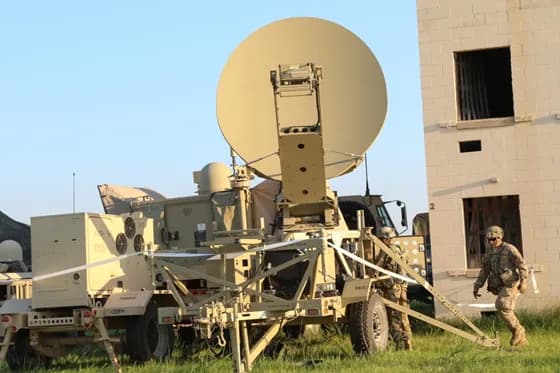
Equally important is the ground segment aspect of satellite communications. A satellite communications engineer doesn’t only deal with the spacecraft; they also design and integrate the ground-based infrastructure that connects to the satellite. This includes Earth station antennas (which can range from huge 15-meter dishes to phased array user terminals), radio frequency (RF) front-ends, network routers, and signal processing systems on the ground. Engineers in this role ensure a robust end-to-end network, meaning the entire communication chain, from a user’s device on Earth, through a ground station, up to the satellite, and back down to another ground station or user, works seamlessly as a unified system. They may develop networking protocols for how data is routed and handed off between satellites and gateways, or how satellites will interface with terrestrial telecom networks (like handing internet traffic from a satellite down into fiber networks).
In practical terms, a satellite communications engineer’s day-to-day tasks can vary. During the design phase of a mission, they might be calculating link budgets, specifying hardware components, and running simulations to test how the communication system will perform. They often use software tools for RF simulation (for antenna coverage patterns or interference analysis) and network simulation. During satellite assembly and testing, they’ll help define and run RF tests for example, verifying that the satellite’s transmitter meets power specs or that the antennas deploy and function correctly.
Once the satellite is launched, communications engineers may work closely with mission operations teams to monitor and maintain the link. If the satellite’s signal is weak or experiencing interference, they diagnose and troubleshoot the issue (perhaps adjusting power levels, switching transponders, or re-pointing antennas). In the era of large constellations, they might also develop algorithms for dynamic resource allocation for instance, allocating satellite bandwidth on-the-fly to different beams or regions based on demand, or managing inter-satellite link connections. In summary, the satellite communications engineer is the go-to expert on keeping satellites talking and the world connected.
Essential Skills and Knowledge Areas for 2026
To excel as a satellite communications engineer, you need a diverse skill set that spans traditional aerospace engineering and modern telecommunications. It’s truly an interdisciplinary role at the crossroads of wireless communications, networking, and space systems. According to Refonte Learning’s Satellite Communications Engineer program curriculum, key competencies and knowledge areas include:
Fundamentals of Satellite Communication: Understanding how information is transmitted over satellite links, orbital dynamics that affect communications (like coverage and line-of-sight periods), and the basics of propagation delay and signal loss in space.
RF and Microwave Engineering: Knowledge of radio frequency electronics used in satellites and ground stations. This includes amplifiers (TWTAs or SSPAs on satellites), low-noise amplifiers (LNAs) in ground receivers, frequency converters, and waveguide components, as well as microwave propagation characteristics.
Satellite Link Budgeting and Performance Analysis: The ability to calculate and optimize link budgets accounting for antenna gains, EIRP, path loss, atmospheric attenuation, G/T (antenna gain over noise temperature), and Eb/N0 to ensure sufficient signal quality (SNR) for reliable communications. Performance analysis also involves evaluating bit error rates, throughput, and latency for various link conditions.
Modulation and Coding Techniques: Mastery of digital communication techniques used in satellite links. This includes modulation schemes (BPSK, QPSK, QAM, APSK, etc.) and forward error correction coding (like turbo codes or LDPC) that improve link reliability. Engineers must choose suitable modulation/coding to maximize data rates within bandwidth and power constraints.
Antenna Design and Ground Station Operations: A solid grasp of antenna theory and design, from the satellite’s own antennas (which could be dishes, phased arrays, or horn antennas) to the large parabolic ground station antennas or compact user terminals. Ground station operations knowledge means understanding tracking systems, antenna pointing, polarization, and how ground facilities manage uplink/downlink connections.
Satellite Networking and Protocols: Beyond point-to-point radio links, communications engineers need to understand how satellites fit into broader networks. This includes protocols for data routing and switching onboard satellites and on the ground, TCP/IP networking over satellite (and dealing with latency or packet loss issues), and emerging network architectures like inter-satellite mesh networking.
Spectrum Management and Regulatory Frameworks: Familiarity with the radio frequency spectrum allocations for satellite services (C-band, Ku-band, Ka-band, V-band, etc.), and the regulations set by bodies like the ITU. Satellite communications engineers must design systems that comply with licensing, avoid harmful interference, and sometimes coordinate spectrum with other satellite operators.
Emerging Trends: 5G, IoT, and LEO Constellations: Staying on top of how new technologies integrate with satellite comms. For example, understanding the 3GPP’s standards for Non-Terrestrial Networks (NTN) which outline how 5G signals can be transmitted via satellites, or knowing how low-Earth orbit constellations differ from geostationary systems. Also, recognizing how satellites are enabling the Internet of Things by connecting sensors and devices in remote areas.
In addition to these technical areas, a satellite communications engineer benefits from strong analytical and problem-solving skills, proficiency in tools (like RF simulation software, network simulators, and possibly programming for automating analyses). Given that the field evolves quickly, a commitment to continuous learning whether through advanced courses, workshops or reading the latest research is crucial to stay current. Communication and teamwork skills are also important, as you’ll often collaborate with systems engineers, software engineers, and operations teams in bringing a satellite mission to success.
Trends Shaping Satellite Communications in 2026
Satellite communications in 2026 is not the same as it was a decade ago. Several major trends and technological advances are redefining how satellites connect with each other and with Earth, opening new possibilities (and challenges) for communications engineers. Here are some of the most significant trends:
1. Mega-Constellations and Mesh Networking: The advent of mega-constellations large fleets of LEO satellites, is perhaps the biggest game-changer. Instead of just a few big satellites in geostationary orbit, we now have “mesh networks in space” composed of hundreds or thousands of small satellites orbiting Earth. These satellites act as a distributed network, handing off connections as they move and even communicating with one another. For example, SpaceX Starlink satellites use laser inter-satellite links to transfer data in space, creating a mesh that can route data optimally without always going through ground hubs. This architecture dramatically reduces latency (Starlink’s LEO latency ~20-40 ms, versus ~600 ms for GEO satellites) and provides global coverage with high throughput. For communications engineers, this trend means developing new network protocols and routing algorithms suitable for a space-based internet. Traditional bent-pipe satellite relays are evolving into intelligent, routable networks. Engineers must figure out how to maintain connectivity as satellites constantly enter and exit view, manage network topology shifts, and prevent data loss, essentially bringing internet routing to space. The mesh network paradigm “blends aerospace and telecom engineering in unprecedented ways”, requiring knowledge of both orbital mechanics and advanced networking.
2. Integration of Satellites with 5G and IoT: The line between terrestrial telecom networks and satellite networks is blurring. By 2026, satellites are becoming an integral part of the global 5G/6G infrastructure. The 3rd Generation Partnership Project (3GPP) has included satellites in its 5G standards (NTN), enabling direct communication between smartphones and satellites in certain bands. This means a future where your 5G phone might connect to a satellite when you’re outside cell tower coverage. Early examples are already here companies are testing direct-to-device satellite services that allow ordinary mobile phones to send messages via satellite when no cellular network is available. Satellite communications engineers thus need to ensure that satellite systems can interface with mobile devices and telecom networks seamlessly. This involves working on modulation schemes compatible with 5G signals and handling issues like Doppler shift and delay so that phones see the satellite as just another “tower.” According to industry analyses, LEO satellites will augment 5G by extending coverage to remote regions and providing backup connectivity, but this also introduces challenges like managing handovers between moving satellites and ground networks. Engineers are developing new network functions and standards to allow smooth roaming between terrestrial and satellite networks, aiming for a future where a user doesn’t notice whether their data is going through space or the ground. Moreover, satellites are enabling the Internet of Things (IoT) on a massive scale: connecting sensors in agriculture, environmental monitoring devices, shipping containers, and more. The trend toward nanosatellite constellations dedicated to IoT (such as Swarm’s tiny satellites) means comm engineers must handle large numbers of very low-bandwidth devices, optimizing protocols for small data bursts and low power use.
3. High-Frequency Bands and Optical Communications: With the congestion of traditional satellite bands (C, Ku, Ka), there’s a push toward using higher frequencies and even optical (laser) communications to achieve greater bandwidth. V-band and Q-band satellites, for instance, are being experimented with to offer ultra-high throughput, which demands engineering solutions to cope with higher atmospheric attenuation. More visibly, optical communication is becoming a reality: lasers offer gigabit-per-second data rates and unregulated spectrum. As mentioned, Starlink satellites now incorporate laser links to talk to each other in orbit. Communications engineers working on these systems must develop pointing/acquisition/tracking systems for laser terminals and deal with challenges like weather interruptions for ground laser links. The benefit is enormous bandwidth and enhanced security (laser beams are hard to intercept), making optical inter-satellite and satellite-to-ground links a hot area in 2026. This trend requires blending classical RF engineering knowledge with photonics and optical engineering. It’s expected that many future satellites will carry both RF and optical comm payloads for redundancy and capacity. Engineers who can navigate both domains will be highly valued.
4. Advanced Communication Protocols and AI Automation: Managing a network of hundreds of satellites and millions of users is incredibly complex. We’re seeing increased adoption of automation and AI in satellite communications networks. Machine learning algorithms can help allocate resources (like dynamically assign spectrum or power to beams where demand is highest) and predict link variations (such as anticipating signal fades and rerouting traffic). Autonomous network operations are in development, where satellites might negotiate spectrum sharing or hand-offs among themselves with minimal human intervention. For example, AI-driven dynamic routing protocols are being researched to cope with the highly dynamic topology of constellations. Additionally, ground station networks are being automated, with smart scheduling of satellite contacts and cloud-based ground station services (e.g., AWS Ground Station). The role of the communications engineer is evolving to include understanding and even developing algorithms that keep these networks running optimally. Familiarity with software-defined networking (SDN) concepts, network virtualization, and AI tools is increasingly a plus for this field.
5. Focus on Security and Reliability: With satellites now handling internet data, financial transactions, and military communications, they are part of critical infrastructure. Cybersecurity for satellite communications is a growing concern. Engineers must ensure links are encrypted and resilient against jamming or spoofing. This might include implementing advanced encryption, frequency hopping patterns, and authentication schemes in the communication protocols. There’s also a trend toward more resilient network design using mesh connectivity so that if one link or satellite fails, others can reroute traffic and prevent outages. In 2026, satellite networks are being designed with redundancy and fault-tolerance in mind from the start (for instance, multiple gateway stations spread around the world to avoid single points of failure, and satellites that can automatically reconfigure their network routes). Communications engineers play a key role in building these robust systems.
Looking ahead, innovations on the horizon promise to continue shaping the field. Research is underway on quantum communication satellites to enable ultra-secure, quantum-encrypted links something that may become viable in the late 2020s. There’s also progress in dynamic spectrum sharing, where satellites dynamically adjust frequencies to coexist with terrestrial 5G or with other satellite systems. Standards bodies like CCSDS and 3GPP are continually updating specifications to improve interoperability between satellites and global networks. All told, the number of commercial satellites in orbit (especially in low Earth orbit) is expected to double by the end of the decade, driving demand for innovative communication technologies and the skilled professionals to implement them. For anyone pursuing this career, staying attuned to these trends is critical the satellite communications engineer of 2026 must be adaptable and forward-looking, ready to incorporate new technologies that keep humanity connected across the globe and beyond.
Career Outlook and Opportunities for Satellite Communication Engineers
With the industry growth and tech trends described, the career outlook for satellite communication engineers in 2026 is outstanding. These specialists are in high demand, and organizations are often competing to hire those with the right skill set. A satellite communications engineer can find roles in a variety of organizations: commercial satellite operators (e.g. operators of communication satellite fleets), satellite internet providers, aerospace manufacturers (building comm payloads for satellites), national space agencies (which need comm experts for their missions), defense contractors (military satcom), telecommunications companies integrating satellite services, and even large tech companies that are starting their own space initiatives (like Amazon’s Kuiper or Google’s balloon/LOON projects in the past). In other words, your skills can be applied in many domains from working on cutting-edge broadband constellations to ensuring reliable satellite links for TV broadcasts or secure government communications.
Job titles for professionals in this field may vary. You might directly hold the title Satellite Communications Engineer, but could also be hired as an RF Engineer, Satellite Network Engineer, Communications Systems Engineer, Signal Processing Engineer, or Ground Station Engineer, depending on the specific focus. Adjacent roles include Spectrum Manager (focusing on frequency coordination and regulatory compliance) and Network Architect for satellite networks. Some engineers work more on the hardware side (designing antennas, RF circuits, etc.), while others focus on the systems and network side (architecting the overall communication system and protocols). There is ample room to specialize or broaden your scope. For instance, one early-career engineer might become an expert in designing payload transponders, while another becomes the go-to person for ground network integration, both are vital pieces of the puzzle.
In terms of geography, opportunities span the globe. Satellite projects are international collaborations, and many regions are building up their space sectors. The skills of a satellite comms engineer can take you to work on projects in the US, Europe, Asia, or literally anywhere a satellite ground station exists. Space agencies like NASA, ESA, ISRO, JAXA, and CNSA all have communication-focused roles. Private companies in Europe (e.g., Airbus Defence & Space, Thales Alenia, SES) and emerging companies in countries like Japan, South Korea, Australia, UAE, or Brazil also seek this expertise. In fact, skilled satellite engineers often find they have a passport to work globally. As one industry expert noted, this field isn’t confined to one region aerospace companies worldwide are looking for talent, and engineers sometimes travel or relocate for exciting projects, since the global industry “truly looks for talent wherever it can be found”. The broad applicability of the skill set means greater career flexibility and stability.
Another attractive aspect of this career path is the earning potential. Satellite engineers (including communications specialists) are generally among the higher-paid engineers due to the specialized knowledge required. In the United States, for example, the median salary for a satellite engineer is around $98,000 per year, and those with several years of experience often earn well into six figures. Niche expertise (like communications subsystem design or network protocol development) can command premium salaries at leading companies. In Europe, salaries are also competitive; countries like Germany or the UK offer averages in the €70k+ range for experienced satellite engineering roles. Even in regions with lower costs of living, these jobs pay well above local averages for instance, satellite engineers in India average roughly ₹1.5 million annually (around $19–20k USD), which is a strong salary in that market. Moreover, as you progress, there’s potential to advance into leadership positions (e.g., Technical Lead, Project Manager, or Engineering Manager) or highly specialized principal engineer roles. Some professionals eventually move into consulting or start their own ventures in the space industry. The combination of high demand and relatively low supply of experienced satellite communications engineers suggests that salary growth and career progression will remain favorable in the coming years.
Finally, it’s worth noting the intangible reward: working as a satellite communications engineer means you are contributing to systems that connect people across the planet, enable first responders through disaster communications, bring education and telemedicine to remote communities, and even support exploration beyond Earth. It’s a career with a sense of purpose and impact. From a career satisfaction standpoint, many find it exciting that their daily work involves space technology. As satellites become even more interwoven with everyday life on Earth, being a specialist who can ensure those space networks run smoothly gives you a front-row seat to humanity’s next great technological evolution.
How to Become a Satellite Communications Engineer A Step-by-Step Guide
Breaking into the field of satellite communications may seem daunting, but with the right approach and persistence, you can build a successful career. Here are some actionable steps to get you started on the path to becoming a satellite communications engineer:
Build a Strong Educational Foundation: Focus on STEM education, particularly in areas like electrical engineering, telecommunications, or aerospace engineering. A bachelor’s degree in one of these fields (or a related field) provides the fundamental physics and engineering principles you’ll need. Courses in wireless communications, signal processing, computer networks, and orbital mechanics are especially relevant. If you’re coming from a different background or need to shore up fundamentals, consider taking foundational online courses in orbital mechanics or satellite systems (Refonte Learning even offers beginner-friendly modules) to cover any gaps. A solid grounding in math (calculus, linear algebra) and physics (especially electromagnetics and radio wave propagation) is crucial. Essentially, you want to understand how things work both in space (orbital trajectories, spacecraft systems) and on the ground (communication theory and network basics).
Master the Basics of Networking and RF: Satellite communications sits at the intersection of networking and radio frequency (RF) engineering, so you should become comfortable with both. Make sure you understand how data networks function (TCP/IP, routing, protocols) as well as the fundamentals of RF circuits and wireless communication. Learn about frequency bands, spectrum, and how signals propagate through the atmosphere. This might involve self-study or targeted courses in telecommunications. Refonte Learning’s programs, for example, emphasize covering core networking and wireless communication topics to prepare you for working at “the intersection of internet networking and wireless communication”. Being proficient in these basics will make advanced concepts (like designing a satellite link or debugging a network issue) much easier to grasp.
Get Hands-On Experience Early Theory alone is not enough; practical experience will set you apart. Seek out opportunities to work on real or simulated space communication projects. If you’re in university, join a CubeSat project, small satellite team, or a high-altitude balloon experiment. These projects often involve building communication systems for example, integrating a radio transceiver on a small satellite and testing it. Such experience teaches you how real-world constraints play out (you’ll quickly learn about antenna tuning, radio licensing, or dealing with noise). If you’re not in school, you can still get creative at home: try building an amateur radio kit or setting up a small dish and receiver to listen to weather satellite images. Even programming an Arduino or Raspberry Pi to simulate a satellite telemetry stream can be insightful. Participating in hackathons or competitions related to aerospace can also be a way to get practical exposure. The key is to apply your knowledge to real problems employers highly value this. As one expert puts it, working on a small satellite or a related project not only cements your understanding, it “looks great on a resume” for landing that first job or internship.
Pursue Internships and Training Programs An internship can be a golden ticket into the industry. Look for internships or co-op programs with satellite manufacturers, space agencies, telecommunications firms (many large telcos have satellite divisions or use satellite services), or aerospace contractors. Even if you can’t immediately get a satellite-focused internship, a position in a related field like telecom network engineering or RF testing can provide transferable skills . During an internship, soak up practical knowledge: you might get to assist in satellite TV ground station maintenance, help design a smallsat communication subsystem, or analyze link performance data. These experiences not only boost your skills but also expand your professional network. In addition, consider structured training programs, for instance, Refonte Learning’s international training and internship programs connect learners to real industry projects under the guidance of mentors. Such programs can simulate job tasks and allow you to work on projects that you can later showcase in interviews. The combination of mentorship and hands-on project work accelerates your learning and signals to employers that you have relevant, applied experience.
Develop a Niche (but Stay Versatile) While you need broad knowledge in this interdisciplinary field, it also helps to have one or two specialty areas where you shine. Perhaps you become particularly skilled at antenna design, or you dive deep into digital signal processing for satellite modems. Maybe coding is your strength, and you learn to write algorithms for satellite network routing or automate ground station operations. Having a niche can make you the go-to person for that subject, which is attractive to employers looking for specific expertise. At the same time, don’t pigeonhole yourself; maintain versatility. A good satellite communications engineer understands how all the pieces fit together (systems thinking). As you grow, try to keep learning a bit beyond your specialty for example, if you’re an RF whiz, also learn some network engineering, and vice versa. This combination of depth in a niche and breadth across the system will make you especially valuable.
Stay Informed and Network with Professionals: The space and telecom sectors evolve quickly, so staying up-to-date is part of the job. Make it a habit to follow industry news: new satellite launches, regulatory changes, technological breakthroughs. For instance, regularly check publications or websites that cover space industry developments, or follow companies like SpaceX, OneWeb, etc., for their updates. Being knowledgeable about current events and milestones will help you anticipate where the industry is headed. Simultaneously, networking can significantly boost your career opportunities. Join professional groups or forums related to space and satellite engineering both online (LinkedIn groups, Reddit communities, etc.) and offline (local aerospace meetups, conferences). Engage with others by asking questions or sharing insights. Consider attending conferences like the International Astronautical Congress or smallsat symposia; these can be invaluable for meeting industry insiders. Don’t be afraid to reach out to professionals on LinkedIn or at events a polite note expressing your interest in their work can sometimes lead to mentorship or job referrals. Being part of a learning community (for example, Refonte Learning’s community of instructors and alumni) also provides networking opportunities with like-minded peers and mentors. Remember, many jobs in this field are not advertised publicly and are filled through networks, so building those relationships can open doors. And beyond job hunting, by networking you’ll learn a lot from others’ experiences and might even find collaborators for projects or research.
By following these steps education, skills development, practical experience, internships, specialization, and networking you will steadily progress towards becoming a capable satellite communications engineer. It’s a challenging journey, but each project you complete or concept you master is bringing you closer to your goal. The field rewards curiosity and persistence, so keep tinkering, keep learning, and stay passionate about the vision of connecting the world through satellites.
Conclusion
In 2026, the role of the satellite communications engineer stands at the cutting edge of technology and connectivity. It is a career where aerospace meets telecom, and where your work can quite literally be orbiting above the Earth. The outlook is undeniably exciting: huge constellations bridging the digital divide, new standards merging space networks with terrestrial 5G, and constant innovation in how we transmit information wirelessly across vast distances. The need for talented engineers to build and maintain these systems has never been greater and the impact those engineers make has never been more tangible in everyday life.
For anyone with a passion for space, technology, and problem-solving, becoming a satellite communications engineer is absolutely a journey worth taking. It offers intellectual challenge, global opportunities, and the chance to be part of humanity’s next great wave of infrastructure, an internet of the skies that connects everyone, everywhere. The career rewards (both personal and financial) are substantial, and the projects you work on will be pioneering and meaningful. Few careers let you say that your work helps enable phone service on remote mountaintops, or brings telemedicine to ships at sea, or guides troops with secure links all from the invisible web of satellites you helped design.
As you prepare to step into this field, remember that the learning process is continuous. Keep building your expertise and adapt to new technologies that emerge. Leverage the resources and communities available for example, Refonte Learning offers specialized courses, mentorship, and hands-on training programs in satellite communications that can accelerate your growth and confidence. With the right skills and support, you can launch a fulfilling career and perhaps one day lead the design of the next revolutionary satellite network.
In summary: The world of satellite communications in 2026 is one of immense opportunity. If you equip yourself with the knowledge and experience outlined in this guide, you’ll be well on your way to becoming a successful satellite communications engineer. The sky is not the limit, it’s just the beginning. Now is the time to lift off and become part of the future of global connectivity.
References: Refonte Learning Blog and Program Resources on Satellite Engineering and Communications.