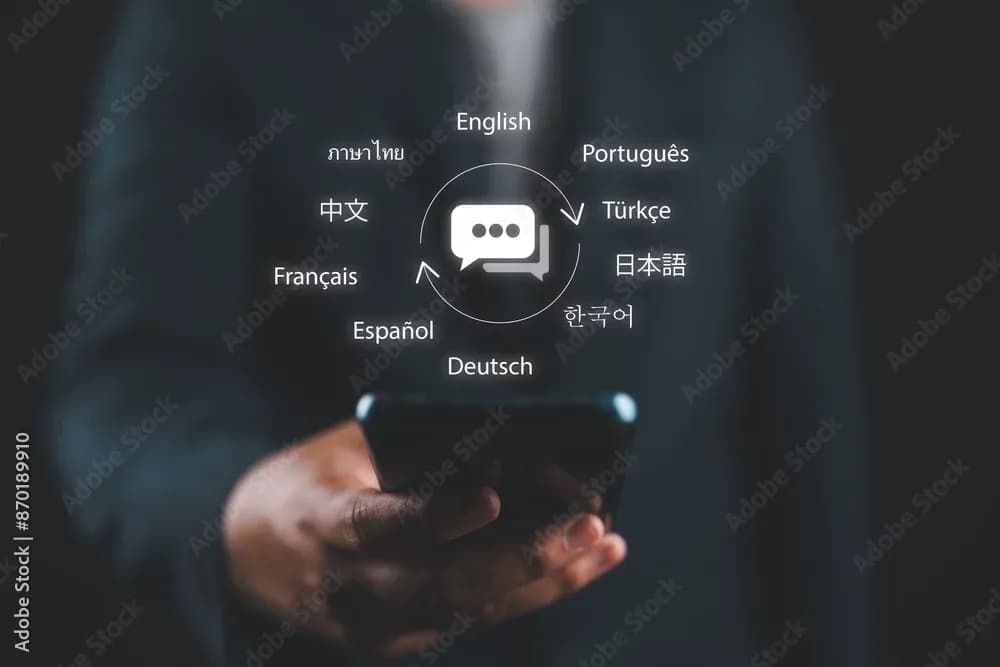
The best free language apps in 2026 are Duolingo, Busuu, Memrise, British Council LearnEnglish, Cake, HelloTalk, and ELSA Speak. Duolingo is easiest for building a daily habit, Busuu gives beginners a clearer course path, and HelloTalk is the most useful option here when the goal is talking with real people.
This list is not based on which app has the cutest mascot, although the green owl would probably like a recount. Each pick had to offer meaningful learning without requiring payment on day one, work well on a phone, and solve a clear problem, such as vocabulary, grammar, listening, or speaking.
The important word is "free." Several apps also sell subscriptions, so this comparison looks specifically at what a student can realistically do before paying rather than pretending every premium feature comes at no cost.
The 7 apps at a glance
App | Best for | Useful free feature | Main weakness |
Duolingo | Daily practice | Full course access | Speaking practice can feel limited |
Busuu | Structured beginners | Complete English course access | Some extra tools require Premium |
Memrise | Vocabulary and real speech | Courses and native-speaker videos | Some advanced tools sit behind Pro |
British Council LearnEnglish | Grammar and listening | Large free English resource library | Split across several apps and resources |
Cake | Short video lessons | Video, audio, quizzes, and recording | Less like a traditional full course |
HelloTalk | Real conversation | Text, voice, and language exchange | Requires confidence in talking to strangers |
ELSA Speak | Pronunciation | Free assessment and limited speaking practice | Full training requires a paid plan |
Why free English apps are actually useful
A phone cannot replace every part of learning a language, but it can make practice much easier to fit into normal life. A 2024 systematic review published in Education and Information Technologies examined 15 empirical studies on mobile-assisted pronunciation learning and found an overall beneficial effect on second-language pronunciation, with generally positive learner attitudes toward mobile practice.
That does not mean downloading seven apps will magically make someone fluent by Friday. It means a phone can become a useful practice tool when students choose an app for a specific job and actually use it regularly.
University students have another problem: language practice is usually competing with classes, readings, papers, work, and sleep. Someone staring at three deadlines may search "Write my term paper for me" and explore WriteMyEssay for academic support, which can leave more room for activities such as speaking practice or vocabulary review. Students still need to understand their coursework and use any outside academic support according to their school's rules.
Martin Buckley, a WriteMyEssay writer with an academic background in sociology, often builds his student guides around making a difficult task smaller and more manageable. Applied to English practice, that approach means choosing one tiny target, such as ten minutes of listening or five new phrases, rather than promising yourself a heroic two-hour study session that somehow turns into scrolling through videos about raccoons.
The British Council offers thousands of free English-learning activities covering reading, writing, listening, grammar, vocabulary, and other skills, so students do not have to rely only on commercial apps. Its current LearnEnglish platform organizes material by level and skill, making it especially useful alongside an app that focuses on only one area.
How we selected the apps
The strongest good free language learning apps had to do more than let users download them for free. An app scored better when its no-cost version contained enough actual learning material to be useful, rather than showing three exercises and then waving a subscription screen like a nightclub bouncer.
Six criteria shaped the list: meaningful free access, beginner friendliness, English coverage, quality of practice, ease of building a routine, and a clear reason to choose that app over the others. Official product pages were used to verify current free features because app plans can change quickly.
The list also needed variety. Seven vocabulary games that all do roughly the same thing would not help much, so the final group includes structured courses, listening resources, pronunciation training, short videos, and real conversations with other learners.
Research on mobile-assisted language learning was used as background, but no claim is made that one app is scientifically "the best." The ranking is a practical comparison of what each currently offers and which type of learner it suits.
How the apps were evaluated
Criterion | What we looked for | Why it matters |
Free access | Useful practice without immediate payment | The app must work on a student budget |
Beginner fit | Clear instructions and a simple starting point | New learners should not feel lost |
Skill range | Reading, listening, vocabulary, grammar, or speaking | Different students have different gaps |
Real English | Natural phrases, audio, or conversation | Textbook English alone is not enough |
Routine | Short lessons and easy progress tracking | Consistency matters more than one huge session |
Extra value | A feature another app does not handle as well | Helps students build a useful combination |
The best free language apps for English in 2026
The right app depends on whether a learner needs structure, vocabulary, pronunciation, listening, or conversation. Using two complementary apps is often more useful than trying to make one platform do everything.
Duolingo
Duolingo is the easiest recommendation for someone who needs help turning English practice into a habit. Its courses remain accessible without payment, and Duolingo confirmed in 2026 that skill lessons in its Practice tab are available across language courses on iOS and Android.
The app works through short lessons with reading, listening, vocabulary, translation, and other small exercises. Its game-like streaks, scores, and daily goals are useful if the biggest problem is not understanding English but remembering to practice it.
English content has become much deeper, too. Duolingo said in April 2026 that most English learners on the platform could progress through B2-level material on the CEFR scale, which is well beyond a few beginner phrases about apples and mysterious bears drinking coffee.
Duolingo is less convincing as a complete speaking solution. It can help with recognition and basic production, but learners who want long, unpredictable conversations should combine it with something like HelloTalk.
Best for: students who need an easy daily routine and enjoy small lessons, streaks, and visible progress.
Busuu
Busuu is probably the strongest English learning app for beginners on this list when a learner wants something that feels more like a course. Its English program currently runs from A1 through C1 and contains more than 655 lessons and over 200 hours of learning material, according to Busuu.
The big advantage is order. Vocabulary, grammar, pronunciation, listening, and speaking appear inside a path, which saves beginners from deciding what they should study every morning.
Busuu says its free plan gives learners access to the complete English course and its community of fluent speakers. Paid plans add extra features, but students can still work through substantial material without subscribing.
The experience feels calmer than some heavily gamified apps. If Duolingo feels like a game that happens to teach English, Busuu feels more like an English course that has been made pleasant enough to use on the bus.
Best for: beginners who want lessons in a logical order instead of choosing random vocabulary topics.
Memrise
Memrise is especially good for learners who are tired of hearing perfectly slow, perfectly clear textbook voices. Its current app uses large libraries of video and audio clips so learners can hear words and phrases spoken in more natural ways.
A free account currently allows learners to study across 34 languages, while Memrise promotes native-speaker clips, personalized review, and vocabulary work as central parts of the experience. In 2026, it also began bringing user-created word lists back into the main product, giving learners more control over the vocabulary they practice.
This makes Memrise particularly useful for students who know grammar rules but freeze when somebody actually speaks English at normal speed. Seeing different speakers use phrases can help bridge the strange gap between "I know this word" and "Why did that word disappear when a real person said it?"
Some AI and advanced features belong to the paid experience, so free users should judge the app on its vocabulary, review, and available media rather than the full feature list.
Best for: learners who want stronger vocabulary and more exposure to naturally spoken English.
British Council LearnEnglish
British Council LearnEnglish is the least flashy option here and one of the most dependable. Its current free learning library contains more than 10,000 activities and exercises covering reading, writing, listening, vocabulary, grammar, and other English skills.
Instead of forcing everything into one giant app, the British Council offers several specialized resources. LearnEnglish Podcasts focuses on listening, LearnEnglish Grammar provides grammar practice, Sounds Right helps with pronunciation, and its wider website offers free level-based materials for adults, teenagers, and children.
Among free language learning apps and resources, this is an excellent choice for students who want trustworthy explanations instead of constant points, animations, and reminders that an owl is disappointed in them.
The downside is that the experience can feel less unified than Duolingo or Busuu. Students may need to choose the right British Council resource themselves rather than simply following one endless course path.
Best for: learners who want serious grammar, listening, pronunciation, and level-based practice from an established education organization.
Cake
Cake is a nice choice for students who already spend plenty of time watching short videos and would prefer some of that screen time to be useful. Its main site encourages learners to make English practice a ten-minute habit, while its service combines video, audio, quizzes, voice recording, and other interactive activities.
The app's strength is short, real-world practice. Instead of approaching English as a long grammar course, it uses small pieces of spoken language that can be repeated and practiced quickly.
Cake's terms state that its service is provided free of charge while also allowing the company to offer paid subscription features and additional content. That distinction matters because "free app" does not always mean every button in the app is free forever.
Cake works well as a second app rather than the only English resource. Pair it with Busuu for structure or the British Council for grammar, and it becomes the fun ten-minute part of the study plan.
Best for: learners who like short videos, everyday expressions, and quick sessions that do not feel much like homework.
HelloTalk
HelloTalk is the app to choose when the missing ingredient is another human being. It connects language learners so they can practice through text, voice, video, corrections, and community features rather than completing only prewritten exercises.
The company says its community now includes more than 70 million learners and supports more than 260 languages. Its core language-exchange service is free, and HelloTalk describes partner matching as free to use.
For students comparing the best free apps to learn English, this one solves a problem the lesson-based apps struggle with: real conversation is unpredictable. A person may type something you have never seen, use slang, ask an unexpected question, or speak faster than the tidy voice in a lesson.
That is also the difficult part. Beginners who are nervous about mistakes may need a few weeks of structured study before chatting feels comfortable, and normal online safety rules still apply when speaking with strangers.
Best for: learners who already know some English and want to start using it with real people.
ELSA Speak
ELSA Speak focuses much more narrowly on spoken English, especially pronunciation and fluency. Its current product uses AI-based speech analysis for pronunciation, intonation, fluency, vocabulary, and speaking practice in situations such as presentations, meetings, and conversations.
The app offers free entry points, including an AI assessment, while broader access is sold through subscription plans. ELSA's July 2026 guide positions the app as a free option for speaking and pronunciation practice, but also makes clear that paid features exist.
This focus makes sense in light of the research. The 2024 Springer review of 15 studies concluded that mobile-assisted practice had an overall beneficial effect on second-language pronunciation.
ELSA is not the obvious choice if you need to learn basic vocabulary from zero. It becomes much more useful when you already know what you want to say but dislike how uncertain you feel saying it.
Best for: students who understand written English fairly well but want more confidence with pronunciation and speaking.
Which app should you choose?
The easiest choice is to match the app to the problem that annoys you most. If vocabulary disappears from your brain overnight, your ideal app is different from that of someone who reads English comfortably but panics whenever another human says, "So, tell me about yourself."
Choose by learning goal
Your goal | Start with | Add later |
Start English from zero | Busuu | Duolingo |
Build a daily habit | Duolingo | Cake |
Learn useful vocabulary | Memrise | Duolingo |
Improve grammar | British Council LearnEnglish | Busuu |
Understand spoken English | Memrise | Cake |
Improve pronunciation | ELSA Speak | British Council |
Talk with real people | HelloTalk | ELSA Speak |
Study in short sessions | Cake | Duolingo |
Prepare for higher-level English | Busuu | British Council |
Spend nothing | Duolingo or British Council | HelloTalk |
There is no need to install all seven. That usually creates seven notifications, seven unfinished courses, and a very impressive collection of app icons. Pick one main app and one supporting app. Give that combination two or three weeks before deciding it has failed.
The best combinations for different students
The smartest way to use the best free language learning apps is to combine two tools that do different jobs. Two similar vocabulary apps will create more repetition, but they may leave the same speaking or listening weakness untouched.
A beginner could use Busuu for a structured path and Duolingo for extra daily review. A more confident learner could use Memrise for listening and vocabulary, then HelloTalk to test those phrases in actual conversations.
Students preparing to study in English may prefer British Council resources alongside ELSA Speak. The first can strengthen grammar, listening, and academic language, while the second gives pronunciation more attention.
Simple two-app combinations
Type of learner | Main app | Second app | Why the pair works |
Complete beginner | Busuu | Duolingo | Structure plus daily repetition |
Shy speaker | ELSA Speak | HelloTalk | Private practice before real conversation |
Vocabulary learner | Memrise | Cake | Words plus short real-life listening |
Grammar-focused student | British Council | Busuu | Detailed practice plus course structure |
Busy student | Duolingo | Cake | Both work well in short sessions |
Intermediate learner | Memrise | HelloTalk | Natural input plus real conversation |
Frequently asked questions
What is the best free app for learning English?
Busuu is a strong all-around choice for beginners because its free plan currently includes access to its complete English course. Duolingo is easier for habit building, while the British Council is better when you want more focused grammar and listening resources.
Can I become fluent using only a free app?
An app can help you build vocabulary, grammar, listening, pronunciation, and study habits, but fluency normally requires using English beyond fixed exercises. Conversation, extensive listening, reading, writing, and real communication give learners practice that a single app cannot completely reproduce.
Which free English app is best for speaking?
HelloTalk is useful for real conversation because it connects learners with other people through text, voice, and video, while ELSA Speak is better for focused pronunciation practice. Using ELSA first and HelloTalk afterward can be a comfortable combination for learners who feel nervous about speaking.
Are free language apps really free?
Some are fully usable without payment, while others use a free tier with optional subscriptions. Duolingo says its language courses remain available free, Busuu gives free access to its English course, and Cake provides a free service while also selling additional subscription features.
How many language apps should I use at once?
One main app and one supporting app are enough for most students. Choose tools that cover different skills, such as Busuu plus HelloTalk or British Council plus ELSA Speak, rather than installing five apps that all teach the same vocabulary.