Introduction
From interplanetary mission trajectories to the orbits of massive satellite constellations, astrodynamics specialists are the unsung architects of our spacefaring era. These are the experts who calculate how we get from Earth to Mars, keep satellites in optimal orbit, and ensure spacecraft navigate safely through the void. As we enter 2026, the role of an Astrodynamics Specialist has never been more critical or exciting. The space industry is booming, with unprecedented numbers of satellites being launched and ambitious missions pushing into cislunar space and beyond. Being an astrodynamics specialist in 2026 means being at the forefront of orbital innovation applying advanced mathematics and physics to real-world space exploration challenges, and turning celestial mechanics into practical pathways among the stars. This comprehensive guide (written by an SEO expert with over 10 years of experience) explores why astrodynamics expertise is in such high demand, what skills and roles define the field, and how you can launch a successful career in this domain. Whether you’re an aerospace student passionate about orbital mechanics or an engineer looking to pivot into the space sector, read on to learn about the trends, opportunities, and training (including programs like Refonte Learning’s Astrodynamics Specialist Program) that can accelerate your trajectory into a thriving space career.
Space Boom Driving Demand for Astrodynamics Specialists in 2026
Why has “astrodynamics” become a buzzword in aerospace hiring? Several major trends in the mid-2020s are propelling the need for specialists in orbital mechanics and trajectory design:
Explosion of Satellites & Mega-Constellations: Humanity is launching more satellites than ever before over 70,000 new satellites are expected in the next five years, an unprecedented pace fueled by mega-constellation projects for global internet coverage. The number of active satellites (around 12,000 in the early 2020s) could soar to 60,000–100,000 by the late 2020s . Every one of these satellites needs its orbit designed, monitored, and occasionally adjusted. Astrodynamics specialists are the ones who plan those orbits and maneuvers. From deploying hundreds of broadband internet satellites in coordinated orbits to optimizing the trajectories of Earth observation CubeSats, the boom in launches directly translates to skyrocketing demand for orbit analysts and trajectory designers. In short, more satellites in space = more orbit calculations and more jobs for astrodynamics experts.
Ambitious Lunar and Interplanetary Missions: The new space race isn’t just about quantity of satellites, it’s also about where we’re going. The mid-2020s have seen a resurgence of missions beyond Earth orbit. NASA’s Artemis program is actively planning human missions to the Moon and a lunar Gateway station, while missions to Mars, asteroids, and even Venus are on the drawing board. These endeavors require complex trajectory design: calculating translunar injection orbits, optimizing gravity-assist routes to other planets, and maintaining novel orbits like the near-rectilinear halo orbit (NRHO) around the Moon. Private companies are also in the game, from SpaceX developing Starship for Mars travel to startups planning lunar landers and space tugs. As we deploy infrastructure in cislunar space and prepare for crewed interplanetary flights, astrodynamics specialists are crucial for charting safe and efficient courses through deep space. Designing a mission to Mars or a stable lunar orbit is no small feat it takes advanced orbital mechanics savvy, which is exactly what astrodynamics experts bring. The push further into space has made this skillset indispensable in 2026’s mission planning teams.
NewSpace Investment & Commercial Spaceflight: The space industry is no longer the exclusive realm of a few government agencies. In the 2020s, private aerospace companies and startups are investing billions into rockets, spacecraft, and satellite networks. This “NewSpace” revolution led by players like SpaceX, Blue Origin, OneWeb, Amazon’s Project Kuiper, and numerous global startups, means more vehicles and missions launched by the private sector than ever. Many of these companies need in-house astrodynamics expertise. For example, a rideshare launch provider needs specialists to plan how different satellites deploy into different orbits; a space tourism firm needs trajectory experts to design safe suborbital and orbital flight paths; a satellite rideshare or orbital transfer vehicle startup must optimize fuel-efficient routes between orbits. With the global satellite industry’s market size growing from about $286 billion in 2022 to a projected $600+ billion by 2032 , everyone is getting into the space game and they all need trajectory designers. The influx of investment has led to more jobs for astrodynamicists not just at NASA or ESA, but at telecom companies, defense contractors, satellite manufacturers, and tech companies launching space initiatives. Wherever there’s a spacecraft to be flown, orbital experts are now in the hiring plan.
Space Traffic Management & Debris Avoidance Challenges: The flip side of launching tens of thousands of satellites is that Earth orbit is getting crowded. There is growing concern over space debris and the risk of collisions in key orbits like low Earth orbit (LEO) and geostationary orbit. Organizations and regulators are beginning to treat “space traffic management” as a priority. Astrodynamics specialists play a pivotal role here: they analyze conjunction (close approach) data, predict potential collisions, and plan avoidance maneuvers to steer satellites clear of danger. In 2026, companies operating large constellations rely on astrodynamics teams to continuously track orbital positions and adjust satellites to prevent crashes. Even the International Space Station has to perform collision avoidance maneuvers due to debris and it’s the flight dynamics folks who compute those burns. As debris mitigation efforts ramp up (like plans to de-orbit defunct satellites or deploy debris-removal craft), astrodynamicists are key to designing those complex rendezvous trajectories and safe de-orbit paths. This pressing need to keep space safe and sustainable is yet another driver swelling the ranks of orbital mechanics experts.
Talent Gap and High-Earning Careers: The rapid growth of the space sector has outpaced the supply of specialized talent. Simply put, there aren’t yet enough engineers with astrodynamics know-how to fill all the emerging roles. This talent shortage makes it a candidate’s market for astrodynamics specialists in 2026 employers are competing (globally) to hire anyone who can skillfully calculate an orbit or optimize a trajectory. As a result, salaries for astrodynamics roles are very attractive, often on par with the highest-paid engineering specialties. According to industry salary guides, an entry-level orbit analyst with a few years’ experience can easily start in the $80k–$100k range, and senior Flight Dynamics Officers (the NASA/ESA term for astrodynamics engineers in mission control) commonly earn well into six figures often around $150,000+ per year at the senior level . Niche expertise in interplanetary navigation or astrodynamics software can command even higher salaries. Beyond the paycheck, these roles offer strong job security and growth; with space activities accelerating, skilled trajectory experts will find no shortage of opportunities to advance into lead engineer or mission design lead positions. In short, astrodynamics in 2026 is a high-reward field, both in impact and compensation for those with the right skills.
Overall, the confluence of more satellites and missions, deeper space ambitions, massive investment, operational challenges, and a talent crunch has made 2026 a perfect time to be an astrodynamics specialist. You’ll be stepping into a role that is vital to virtually every space endeavor, and enjoying strong demand and rewards for your highly specialized skillset. Next, let’s define exactly what an astrodynamics specialist does and what the role looks like on a daily basis.
What Is an Astrodynamics Specialist in 2026?
An Astrodynamics Specialist (sometimes called an Orbital Analyst, Flight Dynamics Engineer, or Space Mission Designer) is an aerospace professional who focuses on the physics and mathematics of how objects move in space. In essence, they are the architects and navigators of orbits and trajectories. If satellite engineers build the spacecraft and satellite operations engineers fly them day-to-day, the astrodynamics specialists are the ones who determine where and how the spacecraft will fly. They calculate the paths that satellites and rockets take from the precise orbital insertion of a satellite around Earth, to the complex gravity-assist route a probe takes on its way to Jupiter. Their domain is orbital mechanics: applying Newton’s laws and gravitational physics to plot courses through space.
In practical terms, an astrodynamics specialist’s responsibilities include:
Orbit Design & Trajectory Planning: Designing the optimal orbit or flight path for a mission’s goals. For a communications satellite, this might mean figuring out the exact altitude and inclination for a geostationary orbit slot. For a Mars mission, it means plotting the transfer trajectory, including launch window, trans-Mars injection, and Mars orbit insertion. These specialists use advanced software to simulate trajectories, ensuring a spacecraft can reach its target using the least fuel (energy) or time possible. They plan everything from simple circular orbits to highly elliptical orbits, Lunar halo orbits, and interplanetary transfer trajectories.
Orbit Determination & Tracking: Astrodynamics experts continuously determine and update the exact path of spacecraft. By analyzing tracking data (from radar, telescopes, GPS, or onboard telemetry), they figure out the spacecraft’s current orbit with high precision. This involves solving equations of motion backward from observed data essentially reconstructing the orbit. If a satellite’s orbit drifts due to perturbations (like Earth’s non-uniform gravity or atmospheric drag), these specialists calculate the adjustments needed. They are the go-to people for knowing “where in space is our satellite right now, and where will it be in the future.”
Maneuver Calculation (Orbital Burns): When a satellite needs to change orbits say, raise its altitude, change inclination, phase into position with others, or avoid a collision an astrodynamics specialist computes the required maneuver (ΔV or “delta-V”). They decide when to burn the thrusters, for how long, and in what direction, to achieve the desired orbital change. They must account for factors like fuel efficiency and ensuring the spacecraft ends up in the correct post-maneuver orbit. For example, if a satellite needs a 50 m/s prograde burn to correct its decay, the astrodynamics team will specify the burn duration and timing. They also support station-keeping, the regular tiny adjustments satellites (especially geostationary ones) perform to stay in their assigned slots.
Mission Trajectory Analysis: For complex missions (like sending a spacecraft to multiple destinations or a satellite constellation deployment), astrodynamics specialists analyze various trajectory options and constraints. They might run trajectory optimization to minimize fuel or time, design gravity assist sequences (using planetary flybys to gain speed), or plan entry, descent, and landing trajectories for landers. A big part of the job is trade studies e.g., comparing a faster but higher-fuel Mars transfer vs. a slower, low-fuel one. They consider mission requirements, spacecraft capabilities, and orbital mechanics to recommend the best path. This is high-level “mission design” work that often starts years before launch.
Collision Avoidance & Conjunction Analysis: As mentioned, a crucial duty is ensuring spacecraft don’t hit anything be it other satellites or space debris. Astrodynamics specialists receive conjunction data messages (CDMs) which predict close approaches. They analyze these and decide if a collision risk is above safety thresholds. If so, they design avoidance maneuvers (a small orbit tweak) to dodge the potential collision. This requires very precise calculations and coordination with satellite operators. In 2026, with frequent conjunction alerts in busy orbits, astrodynamics teams might be planning avoidance burns regularly to protect valuable spacecraft.
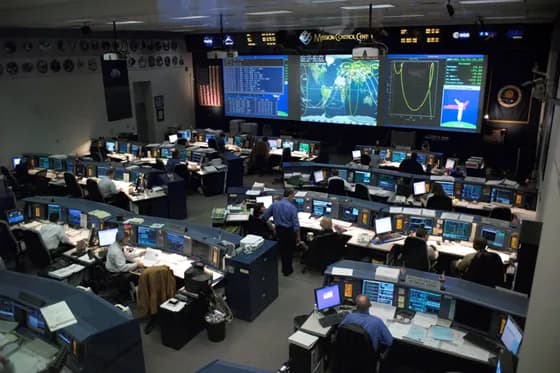
Coordination with Mission Operations: Astrodynamics specialists often work hand-in-hand with satellite operations engineers and mission control teams. In fact, in many missions they sit in the control center as the “Flight Dynamics” or “Orbit” console, advising the flight director. For example, when a satellite needs an orbit adjust or a spacecraft is lining up for a lunar orbit insertion, the astrodynamics team provides the numbers and timing that the operations team will execute. They also prepare contingency plans for off-nominal scenarios (like if a burn underperforms, how to recover). During critical mission phases launch and ascent, orbit insertions, planetary flybys the astrodynamics experts are intensely monitoring telemetry and ready to recompute trajectories on the fly if needed. Essentially, they are the navigators making sure the mission stays on the right path.
In essence, an astrodynamics specialist in 2026 is part navigator, part engineer, part mathematician. Their day might involve writing scripts to simulate an upcoming maneuver, consulting with satellite operators about a station-keeping plan, and crunching numbers to support a proposal for a new mission’s trajectory design. They rely on a deep knowledge of gravitational physics, orbital mechanics equations, and specialized software tools to do their job. As one industry guide aptly puts it, “Not every satellite-focused career is about building hardware or flying spacecraft; some are about charting the courses they take. In this path, you use the laws of physics to send spacecraft exactly where they need to go”. It’s a role where you literally calculate pathways among the stars, turning abstract equations into real-world space missions.
Essential Skills and Knowledge Areas for Astrodynamics Specialists (2026)
To excel as an astrodynamics specialist, you’ll need a robust and diverse skill set grounded in aerospace engineering, physics, and high-level mathematics. According to Refonte Learning’s Astrodynamics Specialist program, key competencies you’ll develop include:
Fundamentals of Orbital Mechanics: Mastery of the two-body problem and Keplerian motion. This is the baseline, understanding how objects orbit under gravity, orbital elements (like semi-major axis, eccentricity, inclination), and Kepler’s laws governing orbital period and motion. Every astrodynamicist must be fluent in deriving orbits and predicting future positions from those orbital parameters.
Perturbations and Station-Keeping: Knowledge of real-world deviations from perfect orbits, such as perturbations due to Earth’s oblateness (J2 effect), atmospheric drag, solar radiation pressure, third-body gravities (Moon/Sun). You’ll learn how these factors slowly alter orbits and how to counteract them. This ties directly into station-keeping calculating thruster burns to correct drift and maintain a satellite’s assigned orbit in the presence of those perturbing forces.
Orbit Transfers & Maneuvers: Proficiency in classic transfer orbits and modern maneuver techniques. This includes Hohmann transfer orbits (the most fuel-efficient way to move between two circular orbits), bi-elliptic transfers, and more advanced low-thrust spiral transfers for electric propulsion. You’ll also study inclination changes, phasing orbits, and rendezvous trajectories (for docking missions). Knowing how to get a spacecraft from point A to point B in space with minimal ΔV is an art and science that astrodynamics programs teach in depth.
Gravity Assists & Interplanetary Trajectory Design: Ability to design and analyze trajectories that take advantage of gravitational slingshots. For missions leaving Earth orbit, gravity assists (e.g. using Venus or Earth flybys to reach the outer planets) are key to extending reach without excessive fuel. You’ll learn how to plan multi-leg interplanetary journeys, calculate launch windows, and optimize trajectories across the solar system. This involves both classical mechanics and numerical methods to iterate on complex solutions.
Satellite Constellation Dynamics: Understanding how multi-satellite constellations are arranged and maintained. In 2026, many missions involve dozens or thousands of satellites working in concert (think Starlink or Earth observation constellations). Astrodynamics experts need to know about constellation design (e.g., Walker Delta patterns), relative phasing, and coverage analysis. You’ll gain skills in optimizing orbital planes and spacing to achieve continuous global coverage or other mission-specific geometry.
GNSS and Orbit Determination Techniques: GNSS (Global Navigation Satellite Systems like GPS) are both users and examples of orbital mechanics. You’ll learn how navigation systems work, and more broadly how to determine a spacecraft’s orbit using tracking data and estimation algorithms (like Kalman filters). Mastery of precision orbit determination taking sensor data and computing an accurate trajectory is a core skill, especially for scientific missions and for operating satellite fleets.
Attitude Dynamics and Control Coupling: Although primarily focused on orbit rather than attitude, an astrodynamics specialist benefits from understanding spacecraft attitude dynamics (how a satellite’s orientation changes and is controlled). Some orbital maneuvers are coupled with attitude (e.g., pointing thrusters for a burn, or managing momentum during trajectory corrections). Knowing the basics of attitude control (reaction wheels, thrusters, torque balances) helps in planning maneuvers that a real spacecraft can execute feasibly.
Numerical Methods & Simulation Tools: Orbit design often relies on computational methods. You’ll need strong skills in numerical simulation, solving differential equations of motion with tools like MATLAB/Simulink, or using specialized astrodynamics libraries in Python (e.g., Poliastro, Astropy). Familiarity with industry-standard software is crucial: tools such as GMAT (NASA’s General Mission Analysis Tool) and AGI STK (Systems Toolkit) are widely used for mission design and operations. The ability to code scripts for custom simulations or use optimization algorithms for trajectory design is a highly valued skill. Essentially, an astrodynamicist in 2026 is part rocket scientist, part software engineer, leveraging computational power to model and solve orbital problems.
Beyond these technical skills, strong mathematical aptitude (especially in calculus, linear algebra, differential equations) is a must orbital mechanics is math-heavy. Problem-solving and analytical thinking are paramount; you’ll often be tackling problems with no textbook example to follow, using first principles to find solutions. Attention to detail is critical too, as a small miscalculation in a maneuver plan can mean missing a target by thousands of kilometers.
Equally important in modern astrodynamics is a bit of creativity and research mindset. The field is always evolving for instance, integrating artificial intelligence to assist in trajectory optimization or developing orbits for novel space missions that have never been done before. The best astrodynamics specialists in 2026 are those who combine rigorous engineering discipline with innovative thinking, staying current with new methods (like machine learning techniques for orbit prediction) and continuously honing their craft.
Finally, communication and teamwork skills shouldn’t be overlooked. As an astrodynamics specialist, you’ll often be the person in meetings explaining complex orbital concepts to program managers or other engineers. You might be writing technical memos justifying why a certain transfer trajectory was chosen, or instructing the ops team on how to implement a maneuver. Being able to translate the esoteric language of orbital mechanics into clear recommendations is part of the job and a skill that will make you more effective and valued in any multidisciplinary aerospace team.
Trends Shaping Astrodynamics & Orbital Mechanics in 2026
Astrodynamics in 2026 is not the same field it was a decade ago. New technologies, challenges, and mission profiles are changing how orbital mechanics is practiced and expanding what astrodynamics specialists work on. Here are some of the most significant trends shaping the field:
Managing Mega-Constellations and Space Traffic: We touched on the sheer number of satellites being launched; a big trend is developing the techniques and tools to manage swarms of satellites. In the past, an astrodynamics team might handle orbit maintenance for a handful of spacecraft. Now, they may be responsible for hundreds in a constellation, all sharing orbital highways. This is forcing a shift toward more automation and batch processing in astrodynamics. Specialists are writing algorithms to optimize constellation phasing, automate collision avoidance across an entire fleet, and schedule maneuvers for dozens of satellites in a coordinated way. There’s also growing interest in formation flying multiple satellites maintaining specific relative positions (used in Earth science missions and planned space telescope swarms). Designing stable formations and reconfiguration maneuvers (to tighten or expand formations) is a cutting-edge challenge for astrodynamics experts. In essence, the field is evolving to treat groups of satellites almost like “constellations of moving pieces” that must be orchestrated, rather than one satellite at a time. The ability to think at the system level (space network of many satellites) while still applying precise orbit control to each is a trend driving new tools and techniques.
AI and Machine Learning in Trajectory Design: Like many tech fields, astrodynamics is embracing artificial intelligence. AI and machine learning algorithms are being explored to assist with trajectory optimization, anomaly detection, and even autonomous maneuver planning. For example, researchers are training machine learning models to predict the optimal ΔV for maneuvers or to search the vast design space of interplanetary trajectories more efficiently than brute-force numerical methods. Onboard AI is also a prospect: future spacecraft might carry smart guidance software that can adjust trajectories autonomously based on mission data, within set boundaries. In mission control, AI-based systems are already helping analyze orbital data for unexpected perturbations or identifying when a satellite’s orbit might need correction. The role of the astrodynamics specialist is shifting toward collaborating with AI tools e.g., verifying and fine-tuning AI-generated solutions, and ensuring automated maneuvers are safe and effective. Those in the field are learning new skills like training machine learning models with past orbital data, or developing “human-in-the-loop” systems where an algorithm suggests a maneuver and a human expert reviews/approves it. AI won’t replace astrodynamicists, but it will augment their capabilities, handling routine optimization so experts can focus on complex, creative problem-solving. The ones who embrace AI and data analytics will stand out in the evolving job market.
Cislunar Space and New Orbital Regimes: With humanity returning to the Moon and eyeing Mars, astrodynamics is extending its domain. A big trend is figuring out new orbits around the Moon (cislunar space) and transit corridors between Earth, Moon, and Mars. The planned Lunar Gateway will use a Near-Rectilinear Halo Orbit an orbit that is highly elliptical around the Moon, balanced by Earth and Moon gravity, something never used operationally before. Designing and maintaining such an orbit is a novel challenge requiring advanced understanding of the three-body problem and periodic orbits in multi-body gravitational fields. Additionally, astrodynamics specialists are now concerned with transfer trajectories from Earth to lunar orbit (which differ from typical Earth-orbit transfers) and the logistics of moving routinely between Earth and Moon (and eventually Mars). Concepts like cyclers (spacecraft perpetually cycling between Earth and Mars) are also being explored, which are essentially repeating trajectories that require careful analysis. All this means astrodynamicists need familiarity beyond Earth-centered orbits they need to handle the nuances of interplanetary and multi-body dynamics more than ever. Agencies and companies are even setting up dedicated “cislunar navigation” teams. If the past decade was about mastering GEO and LEO, the coming decade is about mastering the space between Earth and the Moon (and onward to Mars). This expansion into new orbital regimes is broadening the field and making it even more exciting for new specialists coming in.
Advanced Propulsion = New Trajectories: The rise of advanced spacecraft propulsion is changing trajectory design. Electric propulsion (ion thrusters, Hall effect thrusters) has become common on satellites and deep-space probes. These engines provide low thrust over long durations, which means trajectories that are continuous spirals or gentle curves rather than instantaneous burns. Astrodynamics specialists now must design low-thrust trajectories that might involve weeks or months of continuous thrust significantly more complex mathematically than impulsive burns. They use tools and calculus of variations to optimize these low-thrust paths (for example, sending a probe to an asteroid using minimal fuel but a constantly thrusting engine). Similarly, if nuclear thermal or nuclear electric propulsion becomes reality in the late 2020s, it will allow faster transfers but with different thrust profiles. Even solar sails, which harness sunlight for propulsion introduce new trajectory dynamics (since the “force” is continuous and direction depends on sail orientation). As propulsion tech diversifies, astrodynamics experts are at the forefront of figuring out how to leverage it: e.g., finding trajectories that reduce a Mars trip from 6 months to 4 months using a high-thrust/high-Isp engine, or plotting a path to a near-Earth asteroid using a solar sail. This trend means the job isn’t static, you’re always learning new physics models for propulsion in your trajectory calculations.
Space Situational Awareness & Catalog Management: With the proliferation of active satellites and debris, there’s a parallel growth in the field of space situational awareness (SSA) tracking everything in orbit. Astrodynamics specialists increasingly find opportunities in roles focused on maintaining the orbital catalog, predicting conjunctions, and even advising satellite insurers or regulators about orbital risk. They use observations from radar and telescopes to update trajectories of debris pieces and inactive objects. An emerging challenge is automating the catalog maintenance using AI (as mentioned) and scaling it as objects multiply. There’s also international collaboration happening to standardize data sharing for space traffic. For astrodynamicists, this trend means potential roles outside traditional mission teams for example, working at a space agency or company dedicated to tracking space objects and issuing collision warnings. The skill set is the same orbital mechanics, but applied to monitoring a population of thousands of objects and doing predictive analytics on them. Given the critical importance of avoiding Kessler syndrome (a cascade of collisions), SSA has become a hot area where astrodynamics experts can make a big impact on space safety policy and operations.
In summary, astrodynamics in 2026 is a dynamic, tech-infused field. The classic image of a lone orbital mathematician scribbling equations is giving way to astrodynamics teams using AI, coordinating massive constellations, exploring new frontiers beyond Earth, and ensuring our use of space remains sustainable. For an aspiring astrodynamics specialist, staying on top of these trends learning about autonomy, cislunar orbits, new propulsion, etc. will be key to remaining at the cutting edge. It’s an incredibly exciting time: the core physics may be centuries old, but the applications and scope of astrodynamics are expanding rapidly. Those who adapt and continuously learn will find themselves at the helm of some of the most groundbreaking projects of our generation, literally charting humanity’s path forward in space.
Career Outlook and Opportunities for Astrodynamics Specialists
Given the industry growth and tech trends above, the career outlook for astrodynamics specialists in 2026 is stellar. Virtually any organization involved in launching or operating spacecraft needs people skilled in orbital mechanics. Here are some of the top domains and employers where astrodynamics (orbital) specialists can thrive:
National Space Agencies: Major space agencies like NASA, ESA (European Space Agency), ISRO (India), JAXA (Japan), CNSA (China), and others maintain flight dynamics divisions. These teams handle trajectory design and orbit control for scientific missions, Earth observation satellites, and human spaceflight programs. Working at an agency often means tackling the most advanced missions e.g., calculating the trajectory for a Jupiter orbiter or planning the re-entry path for a sample return capsule. You might serve as a Flight Dynamics Officer in mission control, or as a mission design specialist architecting future missions. The work is challenging and prestigious; you’re often breaking new ground in what’s possible. For example, NASA’s astrodynamics folks recently planned the complex Artemis I lunar flight test trajectory, and ESA’s team continuously calculates orbits for the ExoMars rover delivery and Earth’s gravity field mapping satellites. If you aspire to push the envelope of astrodynamics, an agency role can be highly rewarding.
Commercial Launch Providers & Satellite Operators: Companies that launch rockets or operate satellite fleets are big employers of astrodynamics talent. Launch providers (SpaceX, ULA, Blue Origin, Arianespace, etc.) hire specialists to do mission trajectory design for launches figuring out ascent profiles, stage separation dynamics, and orbital insertions for each mission. They also need analysts to plan rideshare deployments (how to release multiple satellites into different orbits). On the other side, satellite operators like Planet Labs (which flies Earth imaging constellations), SpaceX/OneWeb/Amazon (internet constellations), or Inmarsat/Intelsat (communications satellites) all need orbital analysts. These professionals monitor the orbits of their satellites, plan station-keeping and relocation maneuvers, and maximize the lifetimes of satellites by using fuel optimally. With mega-constellations, operators have dedicated teams just for orbit management and collision avoidance a prime role for astrodynamics experts. The commercial sector is one of the fastest-growing areas for jobs, and often these roles come with the excitement of fast-paced operations and cutting-edge NewSpace culture. Refonte Learning’s 2026 space industry analysis notes that companies worldwide from telecom giants to startups, are launching more satellites than ever and “satellite engineering talent is needed globally, not just in traditional hubs.” This global demand means you could work in a variety of countries or even remotely for an operator, giving lots of flexibility in career path.
Defense and Intelligence Sectors: Many astrodynamics specialists find roles in defense organizations or contractors that deal with military satellites, early warning systems, or surveillance of space. The military runs its own satellites for communication, GPS (e.g., the U.S. Space Force operates GPS and other constellations), and reconnaissance, all requiring orbit analysts to control. There’s also the aspect of tracking other nations’ satellites and debris (part of Space Situational Awareness) which defense entities invest in. Companies like Northrop Grumman, Lockheed Martin, Boeing, and newer players like L3Harris or BAE’s space divisions often recruit astrodynamics engineers for their satellite programs or space traffic management initiatives. These jobs can sometimes require security clearances, but they offer the chance to work on critical national security space missions and often have very competitive salaries. The precision and reliability demanded in defense missions (for example, ensuring a spy satellite is in exactly the right orbit at the right time) means highly skilled orbital experts are valued and trusted in these roles.
Satellite Manufacturing & Spacecraft OEMs: The big satellite manufacturers (Airbus Defence & Space, Thales Alenia Space, Maxar, etc.) and even newer small-satellite startups (like OneWeb Satellites, Planet, or Terran Orbital) need astrodynamics experts as part of their mission engineering teams. When they build a satellite or spacecraft for a client, they often also provide mission design support. If you work for such a company, you might be calculating the transfer orbit for a satellite you’re building, determining how it will be delivered to the customer’s desired orbit, or writing the orbit maintenance plan that goes into the manual. Some manufacturers also provide operations services for clients who don’t have their own control center effectively acting as the operators until handover, which requires orbital analysts on staff. Additionally, companies building crewed spacecraft or space station modules need trajectory pros to plan rendezvous and docking profiles, re-entry trajectories, etc. For instance, the Boeing Starliner and SpaceX Dragon programs employ many trajectory specialists to ensure safe ISS dockings and landings. In these companies, you get to influence design (ensuring the spacecraft has the ΔV and capabilities for its planned orbit) and then see it through to operation a full lifecycle experience.
Research Institutions and Universities: If you are inclined towards research or academia, there are opportunities to pursue advanced astrodynamics work in universities or dedicated research labs. Many universities have astrodynamics research groups focusing on things like trajectory optimization algorithms, orbital mechanics theory, or planetary mission design. They work closely with agencies on mission proposals and often simulate novel concepts (e.g., trajectories for asteroid hopping orbits, or analyzing the stability of Trojan asteroid orbits). Earning a master’s or PhD in astrodynamics can open doors to these research roles, and you may end up contributing to the theoretical foundations that later get used in missions. Some astrodynamics specialists also become professors or lecturers, training the next generation of aerospace engineers. Others work at think-tanks or policy institutes advising on space traffic management strategies and orbital debris mitigation roles that blend technical and policy knowledge. While these may not have the same salary levels as private industry, they can be intellectually fulfilling and impactful on the future of the field.
Consultancies and NewSpace Startups: Lastly, there’s a growing niche for astrodynamics consultants, experts who contract their services to various clients. Small companies sometimes outsource trajectory design for a mission proposal or hire consultants to train their staff in orbital analysis. With the knowledge and experience, you could operate as an independent specialist or join a consultancy firm that supports multiple missions. Furthermore, many startups are doing cool things: building orbital transfer vehicles, planning asteroid mining missions, developing space tourism flights, often they need an astrodynamics guru on the team early on. Joining a startup can be high-risk, high-reward (equity and the excitement of building something new). It might mean being the only astrodynamics person, which is challenging but gives you huge breadth in responsibilities. The space startup ecosystem has exploded, and with it, non-traditional career paths for astrodynamics folks have too. Whether it’s calculating orbits for a space debris clean-up harpoon or optimizing the trajectory of a lunar lander for a private company, the possibilities are endless.
In all these settings, the career trajectory (pun intended) for an astrodynamics specialist is strong. You typically start as a junior analyst or engineer, working on calculations and simulations under senior mentorship. As you gain experience, you can move into lead roles: e.g., Mission Design Lead, Flight Dynamics Team Lead, or Astrodynamics Technical Fellow for a large program. Some even transition into broader systems engineering or mission operations management, given how central orbit planning is to overall mission success. Others become recognized subject-matter experts who consult on multiple projects.
One exciting aspect is the ability to switch sectors relatively easily, many skills are transferable. A person who started at NASA might jump to SpaceX, or a private sector orbit analyst might later work at ESA or start a PhD, etc. The demand is global, so you may have opportunities to work abroad if that interests you, or to collaborate internationally (space is a very international community).
It’s also worth noting the impactful nature of the work: as an astrodynamics specialist, you’re enabling missions that expand humanity’s reach and knowledge. Whether it’s a climate satellite helping save the environment or a rover heading to Mars, your orbit calculations directly contribute to those missions happening. That sense of purpose, combined with the strong job market and compensation, makes this career deeply satisfying for those who love space and math.
To give a sense of specific roles you might hold: after completing an astrodynamics-focused program, you could become an Astrodynamics Engineer, Space Mission Designer, Orbit Analyst, Flight Dynamics Officer, or GNSS Orbit Specialist, among others. These titles vary by organization but generally involve the duties we’ve discussed. With experience, you might become a Mission Design Manager or Head of Flight Dynamics for a mission. The 2026 job market is robust enough that motivated individuals are often fast-tracked into significant responsibility once they prove their skills. All told, if you have a passion for orbital mechanics, the career opportunities are plentiful and growing, the sky (or perhaps Mars) is the limit.
How to Become an Astrodynamics Specialist: A Step-by-Step Guide
Breaking into the field of astrodynamics may sound daunting after all, it’s rocket science! But with the right approach and persistence, you can launch a successful career. Here’s a step-by-step roadmap to help you prepare for and land a role as an astrodynamics specialist in 2026:
1. Build a Strong STEM Foundation: Start with excelling in mathematics and physics, as these are the pillars of orbital mechanics. In high school and early college, focus on calculus, differential equations, linear algebra, and classical mechanics. Orbital dynamics is essentially applied math and physics, so you need to be very comfortable with equations and problem-solving. At the university level, pursue a relevant degree, typically Aerospace Engineering is ideal (as it usually includes orbital mechanics courses), but other fields like Mechanical Engineering, Physics, or Astronautical Engineering can also work. Ensure you take coursework in orbital mechanics, astrodynamics, or celestial mechanics if available. Also valuable are courses in spacecraft dynamics, control systems, and applied mathematics. If your program doesn’t offer specialized astrodynamics classes, seek out online courses or training modules to fill the gap. (For instance, Refonte Learning offers dedicated orbital mechanics refresher modules to shore up fundamentals.) The key is to graduate with a solid grasp of the physics of orbits and the math used to describe them. A bachelor’s degree is usually the minimum for entry-level roles, and many specialists go on to get a master’s degree in Aerospace Engineering or Astrodynamics/Astronautics to deepen their expertise. An advanced degree can be a differentiator for more theoretical or research-oriented positions, but it’s not strictly required for all jobs, practical skills can weigh just as heavily.
2. Master Orbital Mechanics Tools & Concepts: Beyond theoretical knowledge, learn the practical tools of the trade. Get hands-on with industry-standard astrodynamics software. Two widely used (and free) tools are GMAT (General Mission Analysis Tool) and Open Aerospace’s Systems Tool Kit (STK) for mission simulation download them and try out tutorials. Practice plotting orbits, transferring a spacecraft from one orbit to another, and simulating a simple mission (like a lunar flyby) using these tools. Additionally, learn programming skills, especially in Python and MATLAB, since custom scripting is common. Libraries like Poliastro (Python) let you compute orbits and propagations easily, experiment with them by writing code to propagate an orbit or optimize a maneuver. Familiarize yourself with orbital elements (Keplerian elements) and how to convert between them and state vectors (position/velocity) this is fundamental in day-to-day astrodynamics work. If possible, take on academic projects or assignments involving orbit determination or mission design. Some university aerospace programs have specific labs where students use STK or similar software for class projects, those are golden opportunities to learn. You might, for example, do a project on designing a Hohmann transfer to Mars or calculating the orbit of an exoplanet from telescope data. By mastering both the concepts (e.g., understanding why a Hohmann transfer takes the time it does) and the tools (being able to actually compute one), you make yourself immediately useful to employers.
3. Get Practical Experience (Projects, Competitions, Research): Theory and tools are crucial, but nothing beats real or simulated experience. Employers love to see that you’ve applied your astrodynamics knowledge to actual problems. One of the best ways is to join a student project or research team. For instance, many universities have a CubeSat program these small satellites often require students to plan their orbits or even operate them after launch. By joining, you could get involved in calculating the satellite’s orbit, planning its post-launch maneuvers, or analyzing its orbital decay. Another avenue is participating in competitions or design teams such as the AIAA Astrodynamics competitions or NASA’s mission design contests. These competitions pose real-world problems (like designing a trajectory for a sample-return mission) and let you tackle them, learning in the process. If you’re in graduate school, consider focusing your thesis on an astrodynamics topic: maybe you develop a new optimization algorithm for low-thrust transfers or analyze the stability of a new lunar orbit family, this can make you a standout candidate for certain roles. Outside academia, you can also do DIY projects: for example, build a basic satellite tracking station (plenty of hobbyists do this with antenna kits and software-defined radios) to receive satellite signals and practice orbit determination. Even something as simple as using publicly available orbital data (from NORAD’s TLE feeds) and writing a Python script to predict satellite passes can demonstrate your practical skills. The goal is to have something to show: a project report, code, or results that indicate you’ve moved beyond textbook problems. Not only will this cement your own understanding, but you can talk about these experiences in job interviews to illustrate your hands-on capabilities (e.g., “I helped design a low-altitude orbit for our student CubeSat to meet mission constraints and wrote a script to predict its re-entry date.”). In a field as technical as astrodynamics, tangible experience can really set you apart.
4. Pursue Internships or Training Programs: Internships are often the gateway to a full-time career in aerospace. Apply for internships at space agencies (NASA has the Pathways program, ESA has internships, etc.), aerospace companies, satellite operators, or research labs. Even if the internship title isn’t “astrodynamics intern” (as those are rare), anything in space mission design, satellite operations, or aerospace engineering can be relevant. During an internship, seek out the orbit-related tasks: volunteer to crunch numbers for orbit analysis or ask to shadow the flight dynamics team if there is one. Demonstrating interest can sometimes lead your internship mentors to give you extra astrodynamics-related work. If an actual astrodynamics internship is unavailable, consider related fields for instance, an internship in satellite operations will expose you to orbit maintenance activities, or one in guidance, navigation, and control (GNC) will delve into trajectory guidance. There are also structured training programs offered by some organizations (and companies like Refonte Learning) that simulate real industry projects. Refonte’s International Training & Internship program, for example, connects learners with mentors on industry-relevant projects. Participating in such a program can give you quasi-internship experience, like designing a mock mission trajectory as a project, which is great for experience and networking. The objective here is twofold: build skills and make connections. Many interns get hired by the same company or agency if they prove themselves. So treat internship and training projects seriously show initiative, complete your astrodynamics tasks meticulously, and don’t be afraid to ask questions. By the end, aim to have something concrete (e.g., “During my internship at X, I wrote an orbit propagation tool in MATLAB that the team used to plan maneuvers”) and at least one mentor or supervisor who can vouch for your astrodynamics skills.
5. Develop a Niche and Stay Versatile: As you advance, it helps to cultivate a specialty within astrodynamics that you’re passionate about, while also maintaining broad knowledge. Astrodynamics itself is a niche, but even within it you could focus on, say, interplanetary mission design, or orbit determination and tracking, or constellation optimization, or space debris analysis. Having a niche can make you the go-to person for that topic. For example, maybe you become an expert in navigation for lunar missions, that could position you for upcoming Artemis-related jobs. Or you become really skilled at writing software for astrodynamics; many teams need someone who can bridge the gap between theoretical orbital mechanics and software implementation. You might even pursue a relevant certification or workshop (there are occasional short courses on astrodynamics topics, and organizations like AAS/AIAA hold conferences where tutorials are given). However, while developing depth in one area, don’t silo yourself too much. The best astrodynamics specialists also understand the spacecraft and mission context. Continue learning about related areas: spacecraft systems, propulsion, even a bit of operations and attitude control. This will make you far more effective. For instance, knowing about propulsion limitations will inform how you plan maneuvers; understanding mission operations will make your trajectory plans more implementable. Versatility is valued because teams are often small; an orbit analyst who also can write code for the operations team or help with a bit of navigation software is incredibly useful. Also, the field can evolve maybe in 5 years a new kind of orbit (like Earth-Moon cycler routes) becomes important; you’ll need to learn that. So, see yourself as a lifelong learner. Joining professional communities can help with this consider becoming a member of groups like the AAS/AIAA Astrodynamics Technical Committee or simply participating in forums (there are online communities and subreddits for orbital mechanics). These allow you to keep up with the latest techniques and also get help/advice on tricky problems. In summary: carve out an area to excel in (so you stand out), but keep a systems-level mindset so you can flex across tasks and adapt to what the project needs.
6. Network and Showcase Your Expertise: Lastly, don’t neglect the human side of career-building. Networking can open doors in the space industry, which, despite being global, is a somewhat close-knit community. Attend aerospace conferences or workshops if you can (the AAS/AIAA Astrodynamics Specialist Conference is one, or the Space Symposium, SmallSat conference, etc. depending on your interest). These are great places to meet professionals and even potential employers you could strike up a conversation with a mission designer from JPL or an orbit analyst from SpaceX and get career tips or contacts. Leverage platforms like LinkedIn to connect with other astrodynamics professionals; follow companies you’re interested in and engage with their content. Sometimes job opportunities get shared in professional circles before they’re formally posted. Also, consider showcasing your work publicly if possible. For example, if you did a cool trajectory optimization project and it’s not confidential, write a blog post or create a personal website highlighting it. Or contribute to open-source projects related to astrodynamics (there are open libraries and tools where extra hands are welcome). When hiring, recruiters do often look for evidence of passion, a GitHub that has orbital mechanics code or a personal project listed on a resume can spark interest. Refonte Learning’s career services often emphasize that presenting a portfolio of projects (even academic ones) can significantly boost your employability in competitive tech fields. This holds true here: having a few portfolio pieces a simulation you built, a research paper, an internship report, can give you something concrete to discuss in interviews and prove your competence. And of course, when job-hunting, apply broadly and be persistent. You might not land your dream role at NASA on the first try, but you could start at a smaller company and gain experience. Every orbit you design, every maneuver you calculate, will add to your expertise and resume. With the space sector’s growth, foot-in-the-door opportunities are expanding sometimes a company just needs to see that you have the fundamental astrodynamics knowledge and the drive to learn, and they’ll train you on the rest.
By following these steps strong education, tool mastery, hands-on experience, internships, specialization, and networking you’ll position yourself as a prime candidate for astrodynamics roles. It’s a challenging journey (as expected for a field that deals with cosmic mathematics), but also an incredibly rewarding one. Few careers let you say you send things to space for a living! If you stay focused and keep nurturing your passion for orbital mechanics, you’ll find yourself calculating trajectories in a professional capacity before you know it.
Fast-Track Your Career with Refonte Learning’s Astrodynamics Specialist Program
While there are many paths into astrodynamics, a structured program can significantly streamline your journey by providing focused training and real-world experience. Refonte Learning’s Astrodynamics Specialist Program is one such fast-track pathway designed to launch your career in orbital mechanics and space mission design. This comprehensive training and virtual internship program condenses what might take years of self-teaching into an intensive curriculum, equipping you with both the theoretical foundation and practical skills needed as an astrodynamics professional.
Why consider Refonte Learning? Here are a few standout features of the program:
Comprehensive Curriculum: The course covers all key aspects of astrodynamics and orbital engineering, starting from the fundamentals of two-body orbital mechanics and progressing through advanced topics like perturbation theory, transfer orbits, and interplanetary navigation. You’ll delve into orbit design techniques (Hohmann transfers, low-thrust spirals), learn about station-keeping in real-world conditions (accounting for drag, J2, etc.), and even explore specialized areas like gravity assists and constellation design. The curriculum is designed by industry experts to mirror what a modern astrodynamics engineer needs to know, essentially packaging an aerospace grad-school experience into a few months. It even touches on related knowledge such as spacecraft subsystems and mission operations basics, ensuring you understand the broader context of your work. By the end, you’ll have a well-rounded education in orbital mechanics that rivals many university programs.
Hands-On Projects and Simulations: Refonte Learning strongly emphasizes learning-by-doing, which is vital in a field like astrodynamics. Throughout the program, you’ll work on realistic projects for instance, designing a satellite constellation for global coverage, calculating an interplanetary transfer to Mars or another planet, and mastering orbit maintenance strategies for a given mission. These aren’t just paper exercises; you use the same tools and software as the pros (like STK, GMAT, or Python with Poliastro) to simulate scenarios and solve problems. One project might have you optimize a multi-burn maneuver to move a satellite from LEO to GEO. Another might involve analyzing orbital data to perform orbit determination on a CubeSat. The program even includes a virtual internship component where learners collaborate on live-like projects, under mentorship, to mimic actual mission team work. By completing these projects, you graduate with a portfolio of practical work a huge asset when job hunting because it demonstrates you can apply theory to real-world challenges. (Imagine showing an employer a report where you designed a lunar transfer trajectory and estimated the fuel cost that’s tangible proof of skill.)
Expert Mentorship from Industry Veterans: Courses are taught and guided by seasoned aerospace professionals. For example, one of the lead instructors in the Astrodynamics Specialist Program, Dr. Harleen Kaur Mann, is an accomplished researcher with experience in orbital mechanics and space mission design. She has contributed to international space projects and published in leading journals, meaning she brings cutting-edge insights to the classroom. Learning directly from mentors like this means you gain knowledge that goes beyond textbooks, you hear war stories of past missions, learn best practices currently used in industry, and get personalized feedback on your work. The program offers live Q&A sessions and office hours, so you can ask experts about anything from “how do I account for solar radiation pressure in my orbit model?” to career advice on entering the field. This kind of mentorship accelerates your learning and also provides networking connections; your instructors and mentors often become part of your professional network, which can open doors down the line.
Integrated Internship and Career Support: A unique aspect of Refonte’s approach is blending training with practical internship-like experience and career development. As you progress, you’ll engage in a capstone project that simulates a real mission scenario effectively a mini-internship where you might, say, serve as the “flight dynamics team” for a mock satellite mission. This gives you something concrete to put on your resume (and discuss in interviews) even if you haven’t had a formal job in the field yet. Refonte Learning also provides career services, helping with resume building (highlighting your new skills properly), interview preparation (common astrodynamics technical questions, etc.), and even connecting you with its network of hiring partners in the aerospace industry. They understand that the end goal isn’t just to learn, but to get hired, so they work with you on job placement strategies. Top performers in the program may even receive letters of recommendation or direct referrals to partner companies. Essentially, the program is not just teaching you astrodynamics; it’s actively positioning you to land that first job. Considering the aforementioned talent shortage, having this support can give you a significant edge.
Flexibility for Learners: The Astrodynamics Specialist Program is delivered online with flexible scheduling, which is crucial if you’re balancing studies or a job. Typically requiring around 12–15 hours per week over a few months
refontelearning.com, it’s intensive but manageable alongside other commitments. You can join from anywhere in the world (a big plus given space engineering jobs are global), and you get to learn at your own pace with recorded sessions if you can’t attend live. The program often has multiple cohorts, with classes at different times, so you can choose what fits your time zone. This flexibility means you don’t have to put life on hold to pivot into astrodynamics. Moreover, you’ll be learning as part of an online community of peers interacting via forums or group project meetings, which helps build teamwork skills and expands your professional network. Your cohort might include people from different countries and backgrounds, mirroring the diversity of the global space industry and giving you a network of budding astrodynamics specialists to stay in touch with as you all move into jobs.
In summary, Refonte Learning’s Astrodynamics Specialist Program packages a structured learning path with hands-on experience and mentorship essentially hitting all the key points we discussed in the “how to become” section in one program. By the end of the course, you emerge with a solid theoretical foundation, practical project experience, internship exposure, and industry connections, everything you need to be job-ready as an astrodynamics specialist. It’s an excellent option if you’re looking to fast-track your entry into this field, or if you already have a general engineering background and want to up-skill quickly in orbital mechanics.
(Interested readers can find more details or enroll through Refonte Learning’s website. As an SEO expert writing this, I’ll note that specialized programs like this can significantly boost your employability in 2026’s competitive aerospace job market by giving you direct skills that employers are actively seeking.)
Conclusion
In 2026, a career as an astrodynamics specialist places you at the very heart of the new space age. It’s a role where you are literally mapping the pathways to the future calculating how we reach new worlds, how we sustain the satellites that connect our own world, and how we keep space safe and navigable for generations to come. The field is booming, fueled by an unprecedented surge in satellite launches, ambitious exploration programs, and the commercialization of space. Opportunities span across continents and sectors, from government space agencies planning humanity’s next giant leaps, to cutting-edge startups innovating in orbital services. And with emerging trends like AI and mega-constellations, the astrodynamics domain is continually evolving, ensuring that your career will stay dynamic and intellectually stimulating in the decades ahead.
For those with a passion for space and a talent for math and problem-solving, now is the time to act. The demand for orbital mechanics expertise is at an all-time high, and by developing the right mix of technical competencies, hands-on experience, and industry knowledge, you can launch yourself into a thriving career. Educational pathways from rigorous university programs to specialized courses like Refonte Learning’s Astrodynamics Specialist Program are more accessible than ever, bridging the gap between academic theory and practical skills. With dedication and the guidance of these expert-led programs, you can acquire in months what traditionally might take years, positioning yourself as a prime candidate in this niche field.
Imagine waking up each day knowing your work helps navigate spacecraft through the void, or determines how we get astronauts safely to lunar orbit and back, or protects a multi-million-dollar satellite from a debris collision. As an astrodynamics specialist, that’s the kind of impact you have. It’s challenging work requiring precision and care but immensely rewarding. Few other jobs let you directly contribute to humanity’s exploration and utilization of space. Whether you’re assisting a satellite that provides internet to remote communities, or plotting the course of a rover to an unexplored Martian crater, you’re at the forefront of human progress.
So aim high and set your trajectory for success. The path to becoming an astrodynamics specialist may be rigorous, but as we’ve outlined, it’s clearly marked: build your knowledge, practice your skills, connect with mentors, and never stop learning. The universe of opportunities is expanding. In this ever-growing space industry, your career can truly take off reaching new heights (quite literally) among the stars. With 2026 offering an open window for space careers, all it takes is that first push. If you have the passion and commitment, you could soon find yourself calculating the orbital mechanics that turn science fiction into reality, and playing a key role in humanity’s journey beyond Earth. Safe travels on your professional voyage the sky is not the limit, it’s just the beginning!