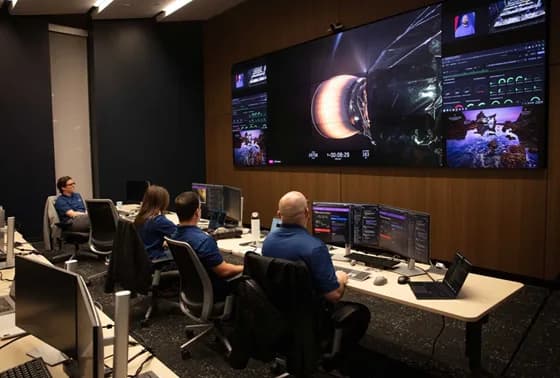
Spacecraft software engineering in 2026 is at an exciting crossroads of a booming space industry and cutting-edge software innovation. With thousands of new satellites and ambitious missions launching, the demand for engineers who can program the “brains” of spacecraft has never been higher. Refonte Learning, a global leader in tech education, notes that careers in spacecraft software engineering now blend the realms of aerospace and computer science, making this role crucial for modern space missions. This comprehensive guide (written by an SEO expert with over 10 years of experience) explores what a spacecraft software engineer does, why this field is booming in 2026, the key trends and skills shaping its future, and how you can launch a thriving career. By the end, you’ll see why becoming a Spacecraft Software Engineer 2026 is such a rewarding path and how programs like Refonte Learning’s Spacecraft Software Engineer Program can equip you with the hands-on experience and expertise to succeed.
What Is a Spacecraft Software Engineer in 2026?
A spacecraft software engineer is the specialist responsible for developing and maintaining the onboard software that controls a spacecraft’s functions, essentially the vehicle’s digital brain. This means writing the code that commands all major subsystems (attitude control, communications, power management, payload operations, etc.), enabling the spacecraft to operate autonomously and communicate with ground stations. Unlike a satellite hardware engineer who focuses on physical structures or electronics, a software engineer’s domain is the embedded computer systems and code that make the spacecraft work. As one industry overview notes, satellite engineering roles span from structural design to “writing the code that runs onboard (‘flight software’)” and it’s this latter responsibility that defines the spacecraft software engineer’s role.
In practice, spacecraft software engineers handle everything from initial requirements and design to coding, testing, and in-orbit support of software. For instance, they implement real-time onboard processes to control the spacecraft’s activities and respond to sensor inputs. They develop telemetry and telecommand (TM/TC) routines to downlink data and receive instructions, integrate robust fault detection and isolation routines, and ensure the software meets strict reliability standards. A modern satellite or spacecraft might have to manage its own health, perform maneuvers, collect and compress science data, and react to faults, all through software that the engineer creates. According to Refonte’s program overview, this field spans “flight software engineering, from requirements and design to testing and verification,” including hands-on work to handle telemetry/telecommand, integrate Fault Detection, Isolation & Recovery (FDIR) systems, and adhere to industry standards like ESA’s ECSS-E-ST-40C and NASA’s software guidelines. In essence, if you think of a spacecraft as a complex robot in space, the spacecraft software engineer is the person who programs that robot’s every move and ensures it can function reliably in the harsh environment of space.
Core Responsibilities and Skills
Spacecraft software engineering is a multi-faceted role that blends programming expertise with aerospace knowledge. Below are some of the core responsibilities and skills that define the role in 2026:
Requirements & Architecture Design: Working with systems engineers, software engineers define the software’s requirements based on mission needs. They outline the software architecture how different modules (e.g. guidance, navigation, control, communications) will interact. This involves understanding the spacecraft’s overall design and deciding what functions the onboard software must perform (from processing sensor data to executing maneuvers). Early in a project, a spacecraft software engineer helps craft the concept of operations and functional requirements for the flight software, ensuring it fits into the spacecraft’s avionics architecture nasa.gov
nasa.gov. They must consider constraints like processor capacity, memory, power, and timing deadlines for real-time operations.
Embedded Programming on Real-Time Systems: A spacecraft’s onboard computer is typically an embedded system running a real-time operating system (RTOS). Thus, spacecraft software engineers need strong programming skills in low-level languages (primarily C/C++) to write efficient, reliable code that can run on resource-constrained space-grade processors. They program tasks such as sensor data handling, control algorithms, and hardware interfacing (for devices like gyros, thrusters, antennas). Mastery of real-time scheduling and concurrency is crucial for example, ensuring the attitude control software runs at a precise frequency. Common space RTOS platforms include RTEMS or FreeRTOS, and engineers often use development boards or simulators to test their code. Refonte Learning’s program highlights embedded C/C++ programming on RTOS as a key competency for this career.
Telemetry & Telecommand (TM/TC): Much of a spacecraft’s operation involves sending data to Earth and receiving commands. Spacecraft software engineers implement the telemetry downlinking of system health and mission data, packing it into standardized formats (often following CCSDS protocols), as well as the telecommand uplink processing to decode and execute commands from ground control. They ensure communications protocols are robust and secure, manage data buffers, and handle communication timeouts or errors. Knowledge of space communication standards (like CCSDS packets or the ESA PUS Packet Utilization Standard) is important. Essentially, the software engineer makes sure the spacecraft can “talk” to ground operators and vice versa.
Fault Management & FDIR: In the unforgiving environment of space, software must detect and respond to anomalies without human intervention (especially for autonomous or deep-space missions). Spacecraft software engineers design Fault Detection, Isolation, and Recovery (FDIR) routines to monitor the health of the spacecraft and automatically take corrective action when something goes wrong. For example, if a sensor stops responding or a subsystem overheats, the software might autonomously reset a device, switch to a backup system, or put the spacecraft in a safe mode. Implementing FDIR requires a thorough understanding of the spacecraft’s subsystems and failure modes. This is a critical responsibility, well-designed fault management software can save a mission, while poor fault handling can lead to disaster.
Onboard Data Handling & Networking: Modern spacecraft carry multiple instruments and subsystems all generating data. A spacecraft software engineer manages onboard data handling, ensuring data flows between subsystems, the onboard memory, and the communication link efficiently. They might implement file systems or data pipelines on the spacecraft, and use space packet protocols to route data internally. This role often overlaps with ensuring the onboard computer can interface with various sensors and actuators (via buses like CAN, I2C, SpaceWire, etc.). In essence, the software engineer orchestrates how information moves around within the spacecraft and gets back to Earth.
Model-Based Development & Simulation: To improve productivity and reliability, spacecraft software engineers increasingly use model-based development tools. Systems like MATLAB/Simulink or SCADE allow engineers to model control algorithms or system logic in a high-level way, simulate them extensively, and then auto-generate portions of code. This approach can catch design issues early and ensure that the software behaves as intended before deploying it on actual hardware. For instance, an engineer might model a satellite’s attitude control system in Simulink to simulate how the code will keep the satellite oriented, and then auto-code it into C for the flight software. Familiarity with these tools is a growing asset. Additionally, software engineers often develop digital twins or high-fidelity simulators of the spacecraft to test software in virtual scenarios that mimic real operations (e.g., simulating orbital dynamics or hardware responses). NASA and industry are investing heavily in model-based engineering and simulation capabilities to streamline software development nasa.gov.
Software Testing & Verification: Because you generally cannot fix software bugs in orbit, spacecraft software undergoes rigorous testing and verification. A spacecraft software engineer spends a significant amount of time writing test cases, running simulations, and performing hardware-in-the-loop tests to validate that the code works in all nominal and off-nominal scenarios. This includes unit testing of individual software components, integration testing with actual hardware or emulators, and full system testing under simulated space conditions. For example, before launch, engineers will test how the software handles a sensor failure or a sudden communication dropout. They follow strict verification and validation (IV&V or ISVV) processes to meet the quality standards required by agencies like NASA/ESA. Continuous integration (CI) practices are also being adopted automated test suites run whenever code is updated, to catch regressions early. In 2026, using modern DevOps tools for configuration management and continuous testing is increasingly common even in space programs.
Security & Reliability: Spacecraft software must be extremely reliable and secure. Reliability is achieved through careful coding (following safety-critical coding standards like MISRA C), extensive testing as noted, and often redundant systems (the software may need to manage a primary and backup computer, for instance). Security is an emerging concern, as satellites become more networked and accessible, protecting the spacecraft from cyber threats or unauthorized access is critical. A spacecraft software engineer designs authentication and encryption for command uplinks, ensures the software cannot be easily tampered with, and guards against known vulnerabilities. Many programs now emphasize “security and reliability in flight software” as a core competency. This means engineers need to be aware of cybersecurity principles and radiation-induced faults (single-event upsets) that could affect software. In short, they write resilient code that keeps the spacecraft safe from both technical glitches and malicious actors.
Collaboration & Standards Compliance: Finally, a spacecraft software engineer doesn’t work in isolation, they collaborate closely with other engineers (systems engineers, hardware designers, mission operations teams) to ensure the software integrates with everything else. They also produce documentation and follow standards required by space agencies or industry. For instance, the European space industry follows the ECSS standards for software lifecycle, and NASA has its own procedural requirements and recommended practices for flight software. Adhering to these processes (for design reviews, code inspections, configuration management, etc.) is part of the job. Following a well-defined process (often CMMI Level 3 or similar for critical software nasa.gov) ensures that the software is developed systematically and is traceable, testable, and maintainable throughout the mission life cycle.
In summary, a spacecraft software engineer in 2026 is a jack-of-all-trades in software as it applies to spacecraft: one day they might be debugging a tricky synchronization bug in the attitude control code, and the next they’re formulating an algorithm to automatically restart a stalled sensor. It’s a role that requires technical breadth (covering protocols to control theory) and a deep sense of responsibility after all, astronauts’ lives or multi-million-dollar satellites might depend on the quality of your code.
Why Spacecraft Software Engineering Is Booming in 2026
If you’re considering this career, you’re coming in at the perfect time. The space industry is experiencing an unprecedented boom in the mid-2020s, which in turn is skyrocketing the demand for skilled spacecraft software engineers. Here are some of the driving forces behind this trend:
Explosion of Satellites and Space Missions: The sheer number of spacecraft being launched is at an all-time high. In the era of “NewSpace”, companies and governments are deploying satellites at a record pace, from large communications constellations to tiny CubeSats. Over 70,000 new satellites are expected to be launched in the five-year span of the mid-2020s, a staggering figure considering only about 12,000 were active in orbit in the early 2020s. Ambitious mega-constellation projects (for global internet like SpaceX’s Starlink, Amazon’s Project Kuiper, OneWeb, etc.) are the main contributors to this surge. Every one of these satellites, whether a refrigerator-sized commercial satellite or a shoebox-sized CubeSat, runs on software that must be designed, coded, and tested. More satellites = more onboard computers = more software engineering jobs. It’s that simple. For spacecraft software engineers, this translates to abundant job opportunities across satellite manufacturers and operators worldwide.
Growth of the Space Industry Market: Space is not just a science endeavor now; it’s big business. The global space industry’s value has been climbing rapidly, and with that comes greater investment in technology and talent. The satellite sector alone (manufacturing, launch, and services) was valued around $286 billion in 2022, and it’s projected to exceed $600 billion by 2032 . Essentially, the market is more than doubling in a decade. This influx of funding is fueling new startups, expanding R&D programs, and launching more missions, all of which need skilled engineers. Governments have increased budgets for space to drive innovation and security, and private investors are pouring money into space startups. For example, not only are traditional players like NASA, ESA, and large aerospace firms active, but we also have SpaceX, Blue Origin, Rocket Lab and countless smaller companies building satellites, lunar landers, planetary probes, etc. Software is a significant chunk of most space project budgets now, especially as missions become more autonomous and data-driven. The ballooning market directly translates to hiring sprees, aerospace companies and even non-traditional tech companies (e.g. Amazon’s space initiatives) are all competing to recruit spacecraft software talent.
Evolving Spacecraft Complexity and Autonomy: Spacecraft in 2026 are far smarter and more autonomous than those of the past. There’s a push towards AI-enabled satellites that can make decisions onboard (for example, deciding which images to capture or filtering data before downlink) and towards fully autonomous deep-space probes that operate with minimal ground contact. The spacecraft autonomy market itself is growing fast expected to reach ~$10.8 billion by 2030 with ~16% annual growth openpr.com. Trends like onboard fault detection with self-healing capabilities, improved autonomous mission planning, and machine-learning-driven navigation are becoming standard openpr.com. This means more sophisticated and complex software is needed on each spacecraft. Take Mars rovers as an example: modern rovers can drive themselves between waypoints using onboard software. Earth observation satellites might employ AI to detect cloud-free images. All this complexity increases the demand for specialized software engineers who can develop advanced algorithms for autonomy, computer vision, onboard data processing, and intelligent fault management. We’re essentially putting more “smarts” into spacecraft, and those smarts are 100% software.
Space Industry Talent Shortage (Global Demand): The rapid expansion of space activities has led to a global race for talent. What used to be a niche field dominated by a few agencies is now worldwide, meaning engineers are needed everywhere. Countries across Europe, Asia, and the Americas are all building up their space sectors. Europe’s space industry workforce grew 60%+ in the past decade, and the United States added over 20,000 new space jobs between 2022 and 2023. Fast-growing spacefaring nations like India and China are launching record numbers of satellites and developing their own crewed spacecraft and space stations. Even emerging players in the Middle East, Africa, and South America are investing in satellites for communication and Earth observation. This means spacecraft software engineers are needed globally, not just in traditional NASA/ESA hubs. Aerospace companies, national space agencies, defense organizations, and NewSpace startups around the world are all hiring. There’s effectively an international talent shortage, demand far outstrips supply at the moment. As a result, companies are offering enticing salaries and even relocation packages to attract skilled software engineers who have space industry knowledge. One Refonte Learning analysis noted that the space sector “truly looks for talent wherever it can be found” on the globe. For those entering the field now, it means you might have your pick of location and project, whether you want to work on European satellites, American Mars missions, or Asian navigation spacecraft. Refonte Learning itself has recognized this boom, tailoring its programs to train engineers in these in-demand skills across international markets.
High-Profile Missions and Renewed Public Interest: The mid-2020s have also seen headline-grabbing space missions, NASA’s Artemis program returning humans to the Moon, plans for lunar bases, Mars sample return missions, the proliferation of high-resolution Earth imaging satellites, and even space tourism flights. High-profile missions shine a spotlight on the need for reliable spacecraft software. For example, NASA’s Orion spacecraft (part of Artemis) relies on a sophisticated flight software system for crew safety nasa.gov. SpaceX’s Crew Dragon and Starship vehicles run millions of lines of code to manage everything from life support to re-entry. When these missions succeed, it underscores the critical role of software, encouraging more investment in that area. Public and media interest in space has surged, inspiring a new generation of engineers to join the field. It’s a virtuous cycle: exciting missions inspire more talent, and more talent enables more ambitious missions. As we push further (like planning for Mars crewed missions or advanced orbital habitats), spacecraft software will be even more pivotal requiring fresh ideas and innovation from the next wave of engineers.
In short, spacecraft software engineering is booming in 2026 because space activity itself is booming. We’re launching more machines into space than ever before and expecting them to do more than ever before and none of that happens without software. The career opportunities are plentiful and diverse, and the momentum doesn’t look to be slowing anytime soon. If you have the skills, you’ll find no shortage of exciting projects to work on, from swarms of broadband satellites to AI-driven planetary probes. It’s an awesome time to be getting into this field.
Trends Shaping Spacecraft Software Engineering in 2026
The fast growth of the field comes with equally fast technological evolution. Several key trends in 2026 are redefining how spacecraft software is developed and what it is capable of. As an aspiring or current software engineer in the space sector, staying attuned to these trends is vital. Here are some of the most significant trends that are shaping spacecraft software engineering in 2026:
1. AI and Autonomous Operations Onboard: Artificial Intelligence isn’t just a buzzword on Earth it’s making its way onboard spacecraft. In 2026, we see a strong trend towards autonomous spacecraft powered by AI-driven software. This means satellites and probes that can make decisions in real time without waiting for instructions from Earth. Examples include AI algorithms for autonomous navigation (a spacecraft adjusting its own trajectory to avoid debris or optimize its observations) and intelligent payloads (satellites that choose the best data to downlink based on content). On the International Space Station, experiments have run machine learning on-orbit to schedule science tasks. The spacecraft autonomy market report projects robust growth, fueled by AI advancements openpr.com. Key trends here involve onboard fault detection with self-healing essentially software that notices anomalies and fixes them on the fly, and machine learning for adaptive operations openpr.com. For instance, an AI could detect when a satellite’s solar panel is underperforming and reconfigure power usage proactively. Spacecraft software engineers now need familiarity with AI techniques (like neural networks or rule-based expert systems) and how to implement them within the constraints of space hardware. A practical example: imaging satellites might use neural nets to do cloud detection onboard (so they don’t waste bandwidth downlinking cloudy images). Another example is autonomous rendezvous and docking software using machine vision. Overall, AI is enabling spacecraft to be smarter and more independent, which is crucial as we venture further out (where communication delays make constant human control impossible). Engineers in 2026 are at the forefront of merging AI with reliable aerospace software, a challenging but exciting frontier.
2. Model-Based Engineering and Digital Twins: Spacecraft software development is increasingly embracing model-based engineering, where you create high-level models of spacecraft behavior and auto-generate code, as well as using digital twins for testing. The benefit is to catch issues early and speed up development by working at a higher level of abstraction. Tools like MATLAB/Simulink, SCADE, or ANSYS are used to model systems (for example, the attitude control system or thermal control logic). These models can be executed in simulations to validate performance, and then automatically converted into embedded code that runs on the spacecraft. This greatly reduces human coding errors and ensures consistency between design and implementation. By 2026, many organizations (including NASA) have invested in model-based software engineering approaches, NASA’s own Software Engineering division highlights expertise in model-based development and even augmented reality for operations nasa.gov. Digital twins are virtual replicas of the spacecraft and its software that run in parallel to the mission. Engineers can feed the twin the same inputs the real spacecraft gets and ensure the software responds correctly, or use the twin to try out new software updates safely. This trend is about leveraging powerful simulation to improve software quality. For software engineers, it means you may need to be comfortable both writing traditional code and working with system models or simulation frameworks. The lines between software developer and systems engineer blur a bit in this paradigm. Ultimately, model-based methods are aimed at reducing development time and increasing reliability, which is very appealing given the high stakes of space software. Expect to see more auto-generated flight code (with human oversight) and comprehensive simulators in every project’s toolkit.
3. DevOps and Continuous Integration for Space Software: The software world at large has been revolutionized by DevOps practices, frequent iterative development, continuous integration/continuous deployment (CI/CD), automated testing pipelines, etc. Traditionally, the space industry was slow and conservative in software updates (you can’t exactly deploy to a satellite every week!). But by 2026, even the space sector is adopting elements of DevOps in the development and testing phase. While satellites in orbit may not get continuous updates, the development process now often involves automated build and test pipelines. Refonte Learning’s curriculum emphasizes continuous integration & testing for space software as an essential skill, reflecting this industry shift. For example, when working on a satellite’s flight code, teams might use version control (Git) and have a CI system that builds the code and runs a battery of simulation tests every time a change is committed. This helps catch bugs early and maintain stability, crucial when a single uncaught bug can jeopardize a mission. Moreover, containerization and virtualization are used to replicate the spacecraft software environment on Earth, making testing more effective. Some companies are exploring partial continuous deployment for instance, updating constellation satellites with new software features or patches periodically (with lots of testing in between). SpaceX, for example, is known to update its Starlink satellite software in orbit in a controlled manner. As a spacecraft software engineer, familiarity with tools like Jenkins, Docker, and automated testing frameworks is increasingly valuable. It’s a shift from the old-school document-driven approach to a more modern software engineering approach, which improves software quality and team agility. In essence, while you won’t push code to a spacecraft as casually as a web app, the development culture is becoming more fluid and modern, taking the best practices from the broader software industry and tailoring them to space.
4. Enhanced Security and Resilience: With space assets becoming part of critical infrastructure (think satellite internet, GPS, Earth observation for governments), they are also becoming targets for cyber attacks or warfare. Cybersecurity in spacecraft software is thus a hot topic in 2026. There is a trend towards designing software with “security-first” principles: encryption of communications, authentication for commands, and hardening of onboard computers against hacking or malware. Spacecraft software engineers now must collaborate with security experts, ensuring that things like command uplinks cannot be spoofed and that the software can’t be hijacked. This might involve integrating secure bootloaders, using cryptographic libraries that are space-qualified, and rigorous testing for vulnerabilities. In 2025, for instance, a simulated hack was able to infiltrate a decommissioned satellite, proving the point that space cybersecurity needed improvement. By 2026, agencies like NASA and ESA have issued new guidelines for space software security. Additionally, resilience against environmental factors (radiation-induced bit flips, etc.) continues to be crucial. Techniques like memory scrubbing, triple modular redundancy in software computations, and careful error handling are more important than ever. Refonte Learning’s program explicitly includes Security and Reliability in Flight Software as a key topic[8], echoing industry demand for these skills. The bottom line: space software can’t just be smart; it also has to be safe and secure. Engineers who can build highly reliable, fault-tolerant, and secure code (following standards like MISRA, DO-178C for space, or new cybersecurity frameworks) are incredibly valuable. This trend will only grow as satellites become part of networks (e.g., Internet of Things via space) and as geopolitical tensions extend into the space domain (satellites need protection from jamming and hacking).
5. Standardization and Open-Source Software: Another trend is the increased adoption of standardized frameworks and even open-source software in spacecraft. Historically, a lot of flight software was built from scratch for each mission. Now, projects are more frequently using common building blocks for example, NASA’s Core Flight System (cFS), an open-source flight software framework, or the European Space Agency’s RTEMS real-time OS for many missions. By using a well-tested core framework, engineers can focus on mission-specific apps on top of it. The year 2026 sees a growing ecosystem of open-source tools for space (libraries for telemetry handling, simulation tools, even FDIR frameworks). This accelerates development and promotes best practices. Space agencies encourage sharing software developments to avoid reinventing the wheel. For instance, if a new cubesat telemetry encoding library is written for one mission, it might be shared openly for others to reuse. As a spacecraft software engineer, being familiar with these common platforms and contributing to open-source projects can be beneficial. It also means learning from a broader community and staying updated via forums, GitHub, and conferences. Standardization also extends to how software is developed – e.g., using the ECSS-E40 standard in Europe or NASA’s NPR 7150.2 software engineering process standard. There’s a push to streamline certification and review by having everyone on a project speak the same “language” in terms of software processes. In short, the days of completely bespoke flight software are fading; now it’s about smart integration of standard components with custom code where it truly adds value.
Staying on top of these trends is critical, a spacecraft software engineer in 2026 must be adaptable and forward-looking. The field is evolving quickly, blending aerospace tradition with modern software ingenuity. Those who ride these trends incorporating AI, leveraging model-based tools, practicing solid DevOps, ensuring security, and reusing proven components will lead the industry. And programs like Refonte Learning’s keep their curriculum up-to-date on these very trends, ensuring that graduates enter the workforce with a cutting-edge skill set.
Career Outlook and Opportunities for Spacecraft Software Engineers
Given the booming demand and technological advances described, it’s no surprise that the career outlook for spacecraft software engineers in 2026 is outstanding. This is one of the most in-demand specializations in the space sector right now, and organizations are often competing to hire those with the right skill set. Let’s break down what this means in terms of job opportunities, growth, and salaries:
High Demand Across Sectors: Spacecraft software engineers can find roles in a wide variety of organizations. On the government side, space agencies like NASA, ESA, ISRO, JAXA, and others hire flight software engineers to work on missions (from deep-space probes to Earth satellites). In the private sector, opportunities exist at satellite manufacturers (building onboard software for satellites of all sizes), launch vehicle companies (writing software for rockets and crew vehicles), satellite operators (maintaining and updating software for satellites in orbit), and the rapidly growing number of space startups. Even defense contractors need software experts for military satellites and spacecraft. Commercial tech companies venturing into space (e.g., Amazon with its Kuiper constellation) are another avenue. In short, your skills are applicable to many domains, you might work on cutting-edge planetary exploration missions, or on a fleet of satellites providing global internet, or on human-rated spacecraft systems. This breadth means greater career flexibility and stability; you aren’t tied to one type of employer. Furthermore, geographically, the jobs are global. As mentioned, the space industry is thriving on almost every continent, so you could work in the traditional hubs like the United States and Europe or in emerging space countries, wherever your interest or life takes you. In fact, skilled space engineers often find they have a “passport to work globally,” since aerospace companies worldwide are looking for talent and often recruit internationally.
Variety of Job Titles and Growth Paths: Within the realm of spacecraft software, you might see various job titles Flight Software Engineer, Embedded Software Engineer (Spacecraft), Avionics Software Engineer, or GN&C Software Engineer (if focusing on guidance/navigation/control algorithms), among others. Early in your career you might be an individual contributor writing and testing code. With experience, you could progress to a Lead Software Engineer for a mission, where you guide a team and make high-level design decisions. Some experienced professionals become Software Architect for space systems, defining the overall software framework used across missions. Others move into management (Software Manager or Aerospace Project Manager roles) or systems engineering. The field isn’t a dead-end; you can grow vertically into leadership or laterally into related areas (systems engineering, mission operations, etc.). There’s even crossover potential: for example, an experienced flight software engineer might transition to a Spacecraft Systems Engineer role, leveraging their detailed knowledge of how software interacts with every subsystem. Also, with the entrepreneurial boom in space, some seasoned engineers start their own companies or consulting firms, offering specialized software solutions to the industry. The bottom line is that as you gain expertise, there’s plenty of room for career advancement and diversification. The combination of high demand and relatively low supply of experienced spacecraft software specialists suggests that career progression will remain favorable in coming years.
Strong Salary Potential: Aerospace engineering roles have traditionally been well-paid, and the specialized nature of spacecraft software engineering puts it towards the higher end of engineering salaries. In the United States, for example, median pay for satellite/spacecraft engineers is around $95,000–$100,000 per year, and those with several years of experience commonly earn well into six figures. It’s not unusual to see senior flight software engineers (5-10 years experience) making between $130k and $160k, especially in high-cost areas or at competitive private companies. Top talent at major tech-space firms or those leading critical missions can even approach or exceed $200,000 annually in total compensation. Refonte Learning’s 2026 Salary Guide shows that a Ground Station Software Engineer (a role closely related to spacecraft software) at mid-career earns about $115,000–$140,000 in the US, indicating the lucrative nature of these skills. In Europe, salaries are also healthy; experienced space software engineers might average €70,000+ in countries like Germany or France. While that can vary by country (and often comes with other benefits), it’s a high-paying job relative to other fields. Even in regions with lower overall pay scales, space engineers are at the top for instance, in India a spacecraft software engineer might earn around ₹1.5 million annually (approximately $20k USD), which is considered a strong salary locally. Moreover, these numbers are trending upwards due to the talent demand; many companies are offering signing bonuses, stock options, and other perks to attract candidates. All told, if you develop expertise in this field, you can expect to be well-compensated, with the gap between supply and demand pushing salaries higher in 2026 and beyond.
Job Satisfaction and Impact: Beyond the numbers, it’s worth noting that this career path offers a unique sense of accomplishment. Working as a spacecraft software engineer means your daily work literally touches space. The code you write might control a rover on Mars, keep astronauts safe in orbit, or enable a satellite that helps connect or inform millions of people on Earth. There’s a real sense of purpose and impact in this job something many engineers find highly fulfilling. You’re solving very difficult problems (space is the ultimate harsh environment) and contributing to humanity’s exploration and connectivity. The challenges are big, but that also means the work is never dull. One day you might be troubleshooting why a spacecraft computer rebooted unexpectedly, another day you’re optimizing a guidance algorithm to save fuel. And on launch day, when your spacecraft takes off, or when it successfully lands on a distant planet, you’ll know that your software made it possible, that’s an exhilarating feeling few other jobs can provide. Many spacecraft software engineers talk about the “cool factor” of telling people you write code for spaceships and it certainly can make for great conversations! In terms of work environment, you’ll likely be part of a passionate team (space projects bring together scientists, engineers, and dreamers from all backgrounds). The excitement of mission milestones deployments, planetary encounters, etc. brings a camaraderie and pride that can be truly rewarding. So, not only is the outlook bright in terms of opportunities and pay, but the intrinsic rewards are high as well. This is a career where you can continually learn and also be part of something larger, whether it’s advancing science, enabling global communications, or inspiring the world.
In conclusion, the career outlook for Refonte Learning’s prospective spacecraft software engineering graduates is very positive. High demand, global opportunities, top-tier salaries, and the chance to work on extraordinary projects all make this field a promising one in 2026. If you have a passion for both coding and space, this is the time to jump in and ride the wave of the new space age.
How to Become a Spacecraft Software Engineer: A Step-by-Step Guide
Breaking into spacecraft software engineering might sound daunting after all, it’s rocket science (or close enough)! But with the right approach and dedication, you can absolutely launch a successful career in this field. Here is a step-by-step guide on how to become a spacecraft software engineer in 2026:
1. Build a Strong Educational Foundation (STEM Focus): Start with solid foundations in science and engineering. Most spacecraft software engineers hold at least a bachelor’s degree in a relevant field. Common degrees include Computer Science, Software Engineering, Electrical/Electronics Engineering, or Aerospace Engineering (with a software focus). Any of these can work, as long as you gain knowledge of programming and basic engineering principles. Key coursework to seek out: programming (C, C++, data structures, algorithms), operating systems, and some aerospace courses like orbital mechanics or control systems. If your program doesn’t cover space topics, consider taking some as electives or online. Mathematics (calculus, linear algebra) and physics (especially mechanics and some electromagnetism) are important to understand how and why spacecraft behave as they do. If you’re coming from a different background or feel gaps in your knowledge, refine your fundamentals through additional courses. Many online platforms offer specialized courses in spacecraft systems or embedded programming. Refonte Learning even offers beginner-friendly modules on orbital mechanics and satellite systems for those new to aerospace, which can help cover any gaps. The goal in this stage is to ensure you have a firm grasp of both software development basics and the context of spacecraft operations.
2. Master Programming and Computer Science Skills: To be a software engineer (in any field) you need strong programming abilities. Focus on mastering C and C++, as these are the primary languages for flight software due to their performance and low-level control. Work on personal coding projects that interact with hardware (for example, programming an Arduino or Raspberry Pi) to get comfortable with embedded systems. Understanding how to write efficient, memory-safe code is crucial, resources are limited in space computers. Additionally, learn scripting languages like Python which are often used for testing and automation on the ground. It’s also highly beneficial to understand computer science fundamentals: data structures, algorithms, and complexity (for optimizing code). Knowledge of how operating systems work (processes, threads, interrupts) will directly apply when dealing with real-time OS on spacecraft. Try to get exposure to real-time computing concepts e.g., write a simple program with real-time constraints or use a small RTOS in a project. Universities sometimes offer embedded systems labs, take those if available. If not, self-study by using free RTOS examples. Remember that flight software is usually event-driven and concurrent, so practice multi-threaded programming and inter-process communication. In summary, code, code, code and aim to become proficient enough that you can confidently build and debug complex software. When you interview for these roles, you’ll likely need to demonstrate your coding skills and possibly even write code that deals with hypothetical spacecraft scenarios.
3. Gain Knowledge of Spacecraft Systems and Dynamics: Writing software for spacecraft requires understanding the environment and systems it will control. While you don’t need to be an aerospace engineer per se, you should familiarize yourself with spacecraft basics. Learn about the common subsystems: attitude and orbit control (how spacecraft orient and move), power systems (solar panels, batteries), communications (radio antennas, modulation), and onboard data handling. Knowing a bit of orbital mechanics is important for instance, understanding orbits, eclipses, and how satellites move will inform your software (e.g., when to schedule operations or expect comms blackouts). Also study the space environment constraints: vacuum, radiation, thermal extremes these affect hardware and sometimes software design (like radiation causing bit flips). If your academic program didn’t cover these, you can self-study or take short courses. Textbooks or online resources on spacecraft systems engineering are helpful. Additionally, learn the lingo: terms like apogee, perigee, LEO/MEO/GEO (orbit types), telemetry, uplink/downlink, etc. This will help you communicate with other engineers on a project. A spacecraft software engineer sits at the intersection of multiple disciplines, so having conversational knowledge of each discipline’s concerns makes you far more effective. There are plenty of free NASA guides and documentation online that explain spacecraft subsystems; use them. When you start working, you’ll continue to learn from domain experts (like the control systems team or thermal team), but having a head start will set you apart.
4. Get Hands-On Experience (Projects, Internships, or Labs): Theory and coursework are essential, but space missions are highly practical, nothing beats hands-on experience. Start by seeking out projects where you can apply your skills. If you’re in university, join a team that works on space-related projects: many schools have CubeSat programs (building small satellites), rocketry clubs, or robotics teams that do high-altitude balloon experiments or rover prototypes. Working on a CubeSat, for example, is invaluable: you could be involved in programming its microcontroller, implementing communication protocols, and testing it—all mini-versions of real spacecraft tasks. This gives you a feel for real-world constraints (limited power, the need for fault tolerance, regulatory constraints on frequencies, etc.). If a full satellite build isn’t available, even participating in something like a high-altitude balloon experiment (which might involve a small payload with sensors and a microcontroller) is useful. Another avenue: look for internships or co-ops with space companies, NASA centers, or aerospace firms. An internship where you help test spacecraft software or develop simulation tools can get your foot in the door and provide mentorship. Many space agencies have summer internship programs for students. If you’ve already graduated, consider contributing to open-source space software projects (for instance, NASA’s open-source core flight software has a community). You could also build your own project for instance, simulate a satellite attitude control in software or write a basic cubesat software framework on a Raspberry Pi. Demonstrating such projects on your resume shows initiative and practical skill. The key is to move from theory to practice: learn how to use lab equipment, how to flash software to a microcontroller, how to read hardware schematics alongside code. By getting your hands dirty, you’ll understand the nuances (like how a slight hardware difference can crash software, or how to diagnose a sensor that’s giving noisy data). Real experience also gives you stories to talk about in interviews and helps you network with professionals in the field.
5. Develop Domain-Specific Skills and Knowledge: As you progress, start honing the specialized skills that spacecraft software engineers are expected to have. We’ve covered many of them in the responsibilities section. Make a checklist and work through gaining proficiency in each:
- Real-Time Operating Systems (RTOS): Try to get experience with an RTOS. You can use an open-source one like FreeRTOS to practice writing tasks, using semaphores, etc. Some CubeSat kits use RTOS as well. Understanding concepts like scheduling, priority inversion, and interrupt handling is key.
- Space Communication Protocols: Learn how data is structured in space systems. For example, look up the CCSDS standards for telemetry packets, or ESA’s Packet Utilization Standard (PUS). Knowing how to encode/decode binary data packets and manage communication links (with propagation delays) is very useful. You might simulate a ground-station-to-satellite link on your PC to see how commanding works.
- Guidance, Navigation and Control (GNC) basics: Software often implements control loops (like a PID controller for attitude control). Take a control systems class or online course if you can, and get familiar with the basics of sensors (gyroscopes, star trackers) and actuators (reaction wheels, thrusters). Even if you’re not designing those algorithms from scratch early on, you’ll be integrating and debugging them.
- Fault Management: Read up on typical fault management strategies used in past missions. NASA has papers on FDIR for satellites. Try writing a small program that monitors variables and triggers fallback routines (simulate a simple fault management).
- Testing Methodologies: Learn how to write good unit tests. If you haven’t used a testing framework, try googletest for C++ or Unity for C in embedded context. Also, get used to using simulators or writing mock interfaces for hardware when testing. Familiarity with test-driven development can’t hurt.
- Tools: Become comfortable with the tools of the trade: integrated development environments (IDEs) for C/C++, debugging tools (JTAG debuggers, GDB for embedded), version control (Git), and issue tracking systems. Also, using MATLAB for analysis or Python for scripting is common, so keep those sharp.
- Standards and Documentation: Space is a regulated domain. It might help to skim through standards like ECSS-E-40 (Software engineering standards for ESA) or NASA’s software engineering handbook to get a flavor of the processes. This can prepare you for the paperwork side of the job (yes, there’s documentation and reviews, it’s not 100% coding). Knowing terminology like “software requirements specification (SRS)”, “peer review”, “validation plan” will help you integrate quickly into a team.
Don’t be overwhelmed, you don’t need to master all of these at once. But incrementally building these domain-specific skills will make you a well-rounded candidate. Each project or internship you do, try to focus on a new skill from this list.
6. Consider Specialized Training or Certification: While a university degree and self-driven projects can get you far, a structured training program can accelerate your journey. Enrolling in a specialized spacecraft software engineering program can provide concentrated, practical learning and a direct pipeline to the industry. For example, Refonte Learning’s Spacecraft Software Engineer Program is a 4-month intensive training that condenses years of industry knowledge into a hands-on curriculum. Such a program is ideal if you want to pivot into this field or bolster your resume with relevant experience. Refonte’s program (which is globally ranked #1 for training & internship) is tailored for people with a Computer Science, Aerospace, or related background and offers several advantages: you work on concrete projects that simulate real-world space software tasks, you get in-depth skill enhancement through a structured curriculum (covering embedded C/C++, TM/TC, FDIR, etc.), you learn under seasoned guidance from mentors who have industry experience, and there’s even a potential internship placement at the end for top performers. In other words, it’s a fast-track to gain relevant experience and even job exposure. Refonte Learning’s program, in particular, gives you a chance to implement a full flight software stack in a lab setting, from writing code to testing it on simulators which can be incredibly valuable to discuss in job interviews. Additionally, having a certification or completion from a known program can make you stand out to employers (it signals you’ve had specialized practical training). Apart from Refonte, there are also certification courses offered by IEEE or universities for embedded systems and such, but those are more generic. A program focused on spacecraft software is uniquely beneficial. In summary, while not strictly required, specialized programs can jump-start your career, expand your network (instructors and peers), and often provide career services to get you placed in the industry quickly. It’s an option well worth considering if you want a comprehensive, guided entry into the field.
7. Network and Engage with the Space Community: Networking is important in any career, and space is no exception. Get involved in the aerospace community this can open doors to opportunities and also keep you inspired. Attend space industry conferences, workshops, or webinars (many are virtual/hybrid in 2026). Conferences like the Small Satellite Conference, CubeSat Developer Workshop, or IEEE Aerospace Conference often have sessions on software. Even if you’re a student, there are sometimes discounted passes or volunteer opportunities to attend. Join online communities: there are active forums and groups (Reddit’s r/spacex or r/cubesats, Stack Exchange’s space section, Slack/Discord groups for space professionals) where you can ask questions and learn from others. Don’t hesitate to reach out to professionals on LinkedIn – many are happy to talk about their work and give advice if you approach politely and show genuine interest. Having connections can alert you to job openings or give you referrals (which can be very helpful in landing interviews). Additionally, consider participating in hackathons or competitions related to space or robotics. NASA, ESA, and others host coding challenges (like NASA’s Space Apps Hackathon) which often include software problems to solve these events are great to sharpen skills and meet like-minded peers. When you apply for jobs, having a recommendation from someone in the field, or even just mentioning you met a team at a conference, can set you apart. Refonte Learning’s community, for instance, includes mentors and matched candidates, engaging with that network could directly lead to opportunities. Remember, the space industry, while growing, is still a somewhat tight-knit community; reputations and relationships can carry significant weight. By being active and enthusiastic in the community, you not only learn but you also demonstrate your passion which employers love to see.
8. Apply and Be Persistent: Finally, the obvious step: start applying for spacecraft software engineering roles (or related entry-level roles). Prepare a strong resume that highlights your relevant projects, skills (especially the embedded systems and any space-specific work), and education. Be sure to mention any hands-on experience like CubeSat projects or the Refonte program, those really catch attention. When interviewing, you’ll likely face a mix of software questions (to test your coding and problem-solving ability) and engineering scenario questions (e.g., “what would you do if the spacecraft computer resets unexpectedly?” or “how would you compress data for downlink?”). Don’t worry if you don’t know everything they’re often looking at how you think and if you have the fundamentals. Be ready to share what you learned from your projects or internships, including challenges you overcame. Leverage your network: if you met someone at a company or a mentor from a program, politely ask if they know of openings or can refer you. Entry-level positions might not always be titled “Spacecraft Software Engineer”; sometimes roles like Embedded Software Engineer, Software Test Engineer (Spacecraft), or GNC Software Developer can be pathways in. Once in, you can learn on the job and move into core flight software roles. Persistence is key space jobs can be competitive, but the demand is in your favor in 2026. If you don’t succeed at first, keep building your skills (maybe take on another project, contribute to open source, etc.) and try again. With the right skill set and passion, you will find your opportunity.
Embarking on the journey to become a spacecraft software engineer is challenging, but as we’ve outlined, there is a clear path to follow. Focus on education, practical experience, continual learning, and networking. By following these steps and perhaps taking advantage of specialized training like Refonte Learning’s program you can position yourself to join the next generation of engineers programming the future of space missions. In 2026 and beyond, these skills are your launchpad to an exciting career at the final frontier. Good luck, and clear skies on your journey!
Refonte Learning Spacecraft Software Engineering 2026, Program Your Way to the Stars!