
Learning Korean in LA sounds straightforward until you actually try to find a tutor who fits your schedule, budget, and goals. The search for Korean Tutors Online gets complicated fast, especially when platforms list hundreds of options with wildly different vetting standards, pricing, and teaching styles. Some students want TOPIK exam prep. Others just want to hold a conversation without freezing up. After reviewing dozens of platforms across tutor quality, scheduling flexibility, and lesson structure, this guide breaks down the five best options for LA-based learners right now.
The shortlist methodology
Platforms were evaluated using publicly available information pulled from official websites, user review platforms, feature documentation, and directory listings. Only options with a demonstrated track record in language education made the cut. → See the full research breakdown
● italki - Best for live conversational language learning and speaking fluency
● Ba Ba Dum - Best for free language learning games
● Memrise - Best for language learning for global audiences
● LingQ - Best for immersive language learning through authentic content
● Live Lingua - Best for personalized online language learning and immersion instruction
What's at Stake When Korean Tutors Online Falls Short
Picking the wrong platform wastes more than money. It wastes momentum, and that's the harder loss to recover from.
Students who land with under-qualified tutors often stall out early, especially when they're trying to build Hangul recognition while also practicing spoken Korean. Finding a tutor aligned with your specific goal, whether that's conversational fluency, business Korean, or TOPIK-level advancement, takes real filtering. Inconsistent vetting across platforms makes that harder than it should be.
The right match shows up directly in lesson completion rate per student, how steadily a learner moves through TOPIK levels, and how often they rebook the same tutor. Those numbers don't lie. A well-chosen platform gets all three moving in the right direction.
Top 5 Korean Tutors Online; Specs at a Glance
Note: All data in this table is sourced from review platforms and the official websites of the listed companies.
Company Name | Years Operating | Headquartered In |
italki | Since 2007 | Hong Kong |
Ba Ba Dum | Since 2014 | Poland |
Memrise | Since 2010 | London, United Kingdom |
LingQ | Since 2007 | West Vancouver, BC |
Live Lingua | Since 2008 | Boston, Massachusetts |
1. italki - Best for Live Conversational Language Learning
Which Services Does italki Provide?
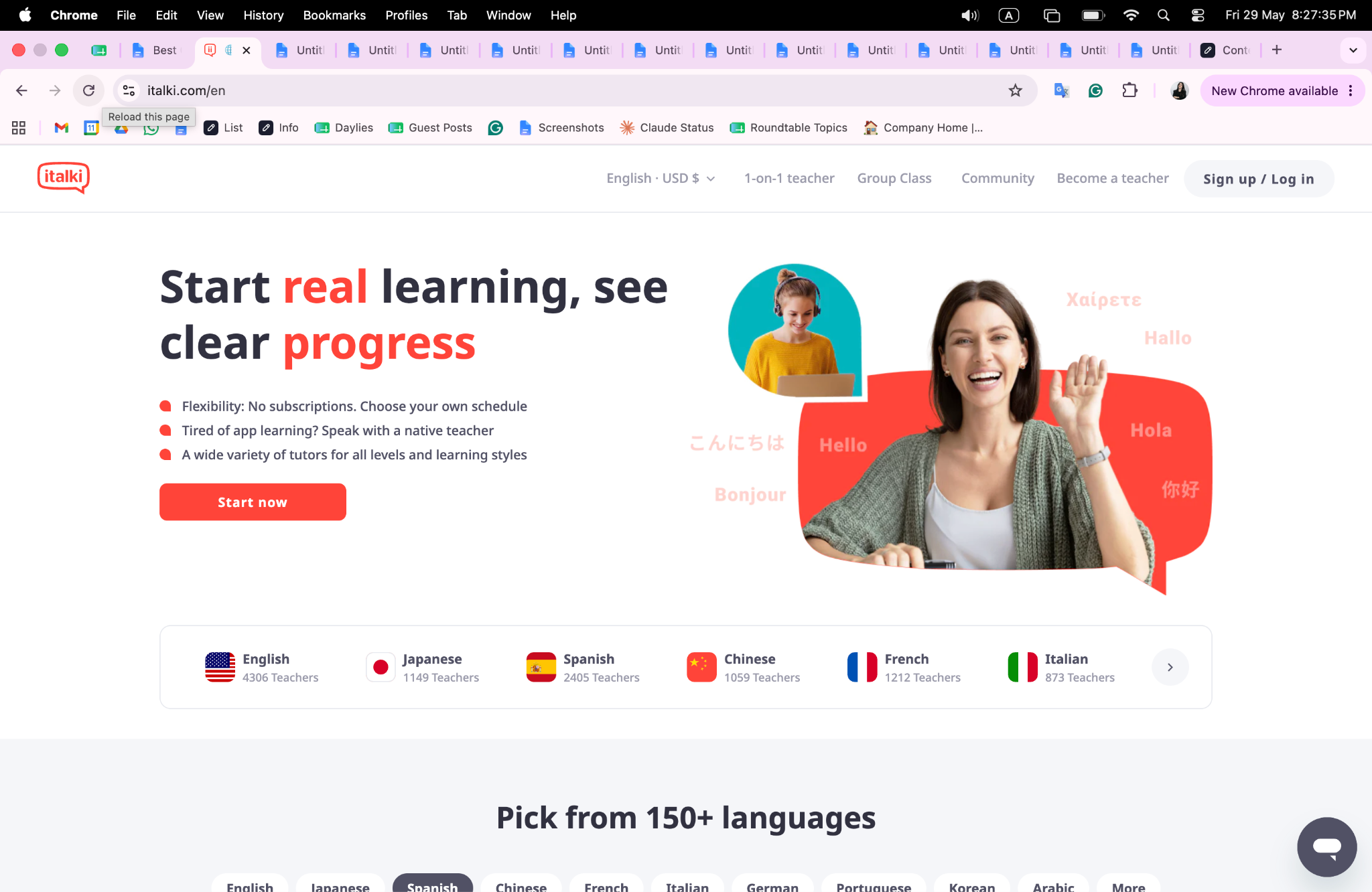
italki connects students with native-speaking Korean tutors through live, one-on-one video lessons on a flexible pay-per-lesson basis. The platform covers both certified professional teachers and community tutors, so learners can filter by price point, availability, teaching approach, and tutor background. Beyond scheduled lessons, italki offers community tools like the Notebook feature for written corrections, language partner matching, and discussion forums, making it more than just a booking platform.
What's italki's Real Advantage for Korean Tutors Online?
The platform solves the consistency problem that plagues tutor marketplaces by giving students direct visibility into tutor profiles, student reviews, and lesson structures before booking anything. Honestly, that level of transparency before a single lesson is booked is rare, and it's why italki consistently produces strong tutor rebooking rates among serious language learners.
What Real Customers Report:
Students tend to mention the sheer variety of Korean tutors available and how easy it is to switch if the first match isn't quite right. The pay-per-lesson model is often mentioned as a pressure-free way to try different teachers. A common note is that lesson quality varies among tutors, since they set their own methods, so reading reviews before booking matters a lot.
2. Ba Ba Dum - Best for Free Language Learning Games
Which Services Does Ba Ba Dum Provide?
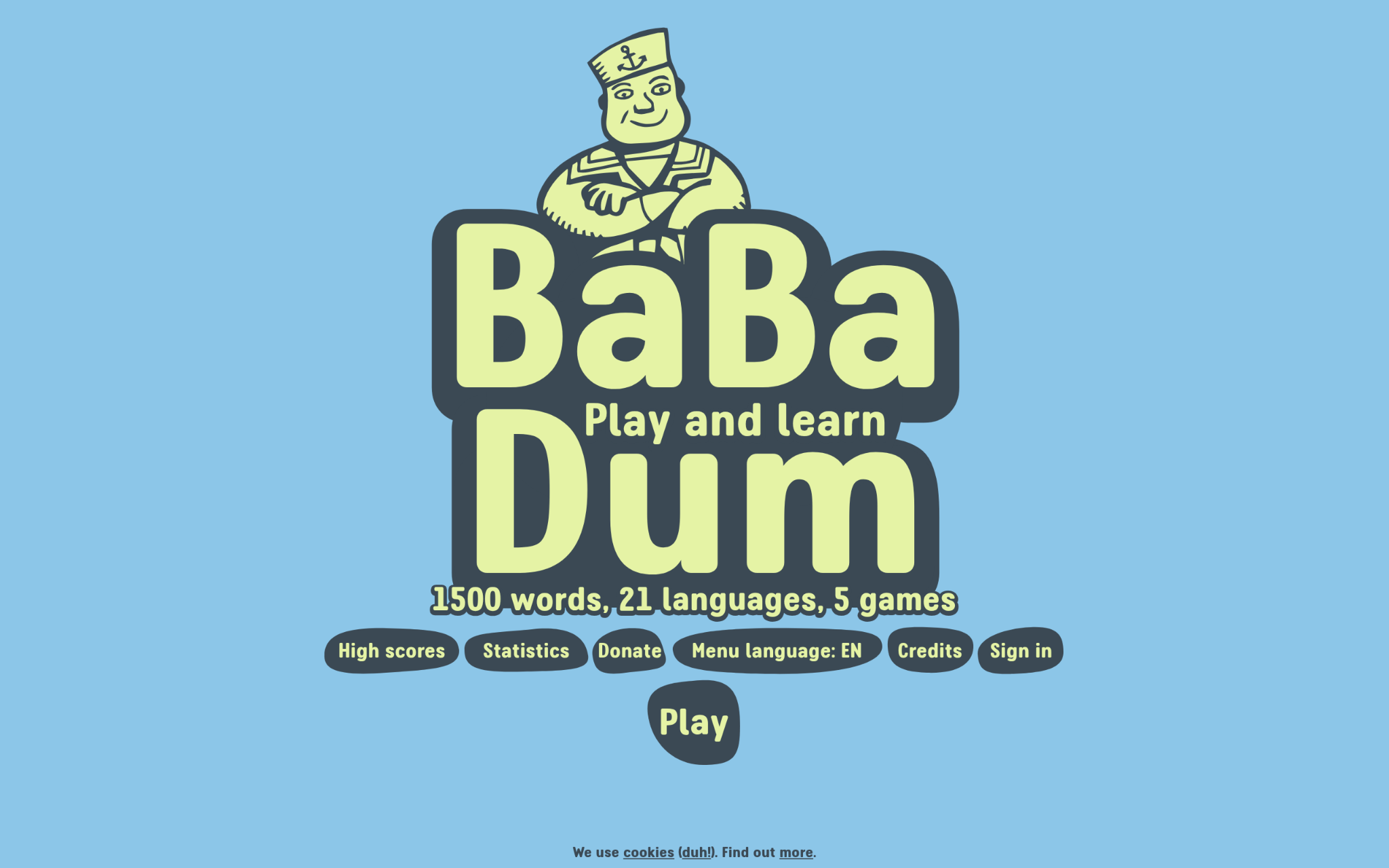
Ba Ba Dum is a free, ad-free vocabulary platform built around five distinct games that teach 1,500 words across more than 20 languages. Created by Polish designers and educators Aleksandra and Daniel Mizieliński, the platform uses image-to-word matching, fill-in-the-blank challenges, multiple-choice questions, word unscrambling, and written word recognition. It's purely vocabulary-focused (no grammar instruction, no tutor access), but it does that one thing with genuine polish and zero friction.
What's Ba Ba Dum's Real Advantage for Korean Tutors Online?
For learners building foundational Korean vocabulary before committing to paid lessons, Ba Ba Dum removes every barrier. No account required, no subscription, no ads. That kind of friction-free entry point is hard to match when a student is still deciding whether to invest in structured Korean study.
What Real Customers Report:
Users consistently praise the clean design and the fact that it genuinely feels like a game rather than a chore. The platform has picked up multiple design awards, including Awwwards and FWA recognition, which tracks with how polished the experience feels. The main limitation users mention is the vocabulary ceiling since 1,500 words takes you only so far.
3. Memrise - Best for Language Learning for Global Audiences
Which Services Does Memrise Provide?
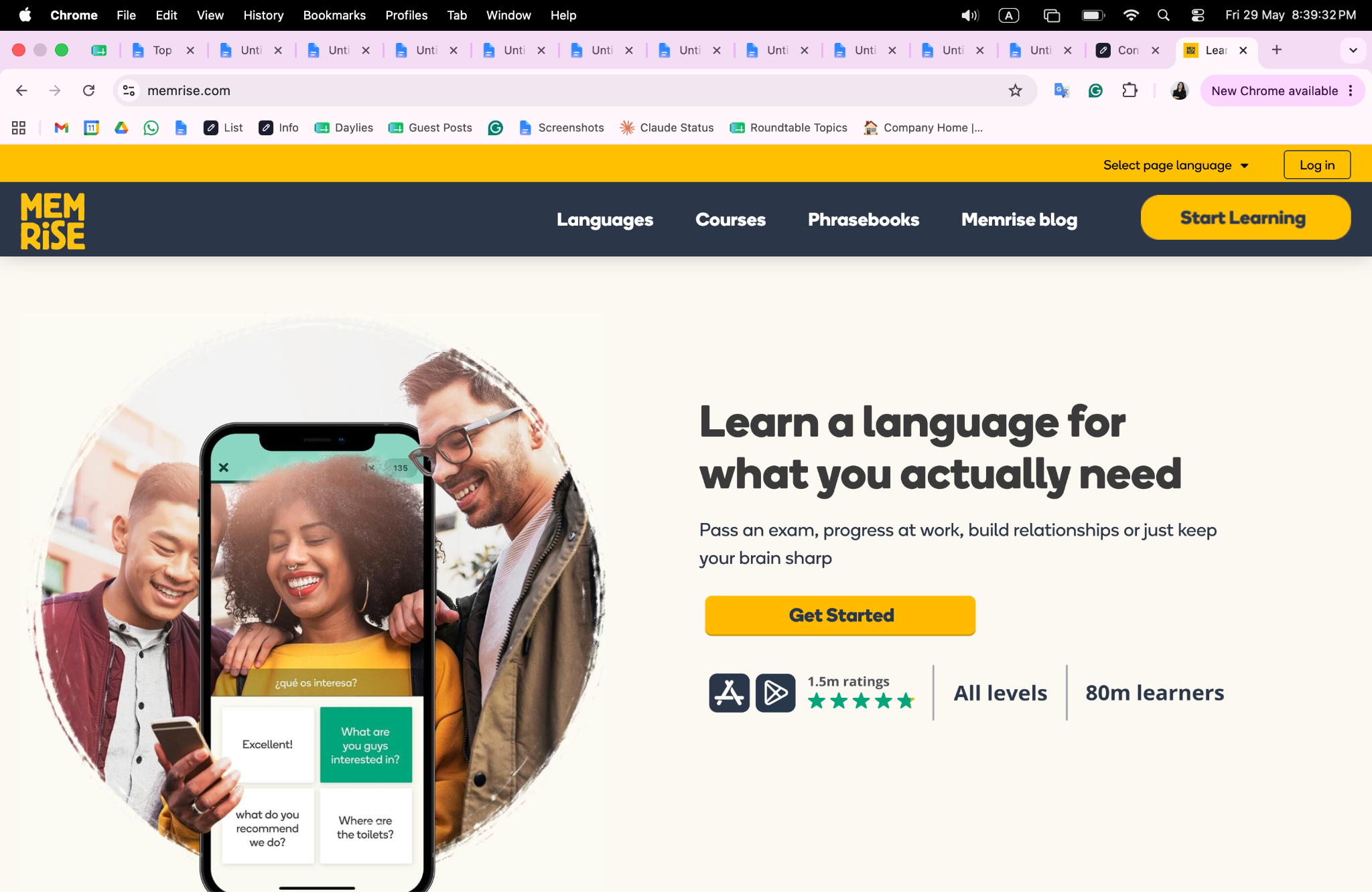
Memrise is a web and mobile language platform supporting 200 language combinations across 24 languages, built around spaced repetition, real native-speaker audio and video, and AI-powered pronunciation feedback. With over 50 million users, the platform blends community-sourced content with evidence-based memory techniques to teach practical communication skills rather than textbook Korean. The app covers everything from beginner Hangul to real-world conversational phrases heard in everyday situations.
What's Memrise's Real Advantage for Korean Tutors Online?
While many platforms teach Korean through structured drills, Memrise leans into authentic native-speaker clips that reflect how the language actually sounds in real conversations. That usually means learners arrive at their first live tutoring session with better listening comprehension than those who trained exclusively with audio-free apps. Not a small thing.
What Real Customers Report:
Memrise has earned genuine recognition, including Google Play's Best App of 2017, which lines up with what users consistently say about the experience. Most reviews highlight how the spaced repetition system keeps vocabulary from fading between study sessions. A smaller group of users note that the free tier has limits and the full experience requires a paid plan (not cheap, but worth it for committed learners).
4. LingQ - Best for Immersive Language Learning Through Authentic Content
Which Services Does LingQ Provide?
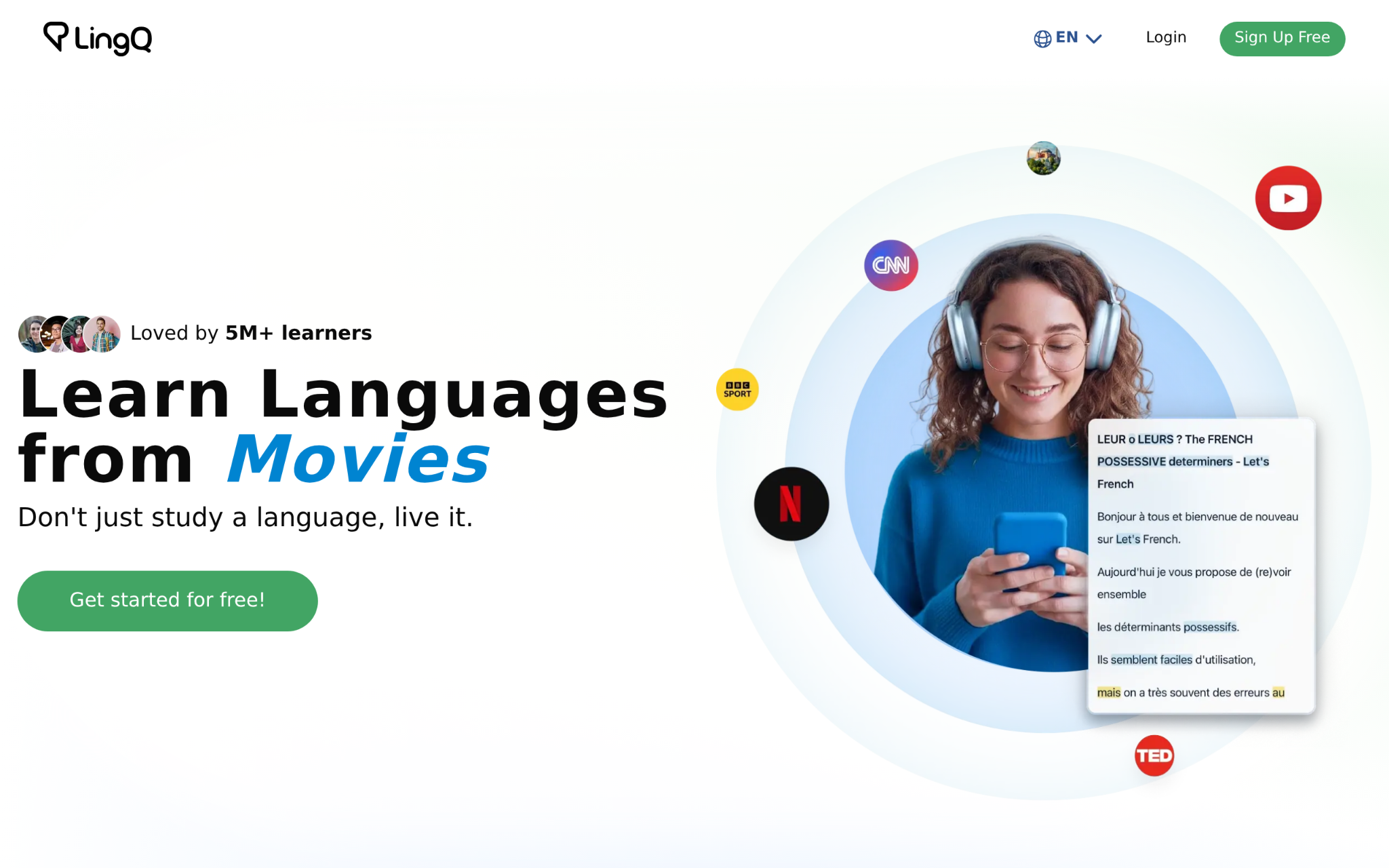
LingQ is a learner-directed language platform founded by polyglot Steve Kaufmann that teaches through immersion in authentic material, including podcasts, books, TV shows, and videos. Supporting over 50 languages, the platform lets users import content, generate transcripts, track vocabulary progress without limits, and access materials offline through Premium plans. There's no fixed curriculum here. Students shape their own Korean study path around content they actually want to engage with.
What's LingQ's Real Advantage for Korean Tutors Online?
LingQ addresses the motivation problem that kills most self-study attempts by letting Korean learners work through content they genuinely care about, whether that's K-drama episodes or Korean news podcasts. Independent researchers at Compare Language Apps ranked it the most effective language app available, which is a strong signal that the immersion model delivers real results.
What Real Customers Report:
The reviews paint a pretty clear picture: learners who stick with LingQ tend to build reading and listening comprehension faster than those using more rigid platforms. Co-founder Steve Kaufmann's YouTube channel with over 760,000 subscribers adds credibility and keeps the community engaged with the methodology. The platform's interface takes some getting used to (think functional over flashy), but users who push through that curve report strong long-term gains.
5. Live Lingua - Best for Personalized Online Language Learning

Which Services Does Live Lingua Provide?
Live Lingua is an online language school pairing students with certified, native-speaking tutors for live instruction across 11-plus languages, including test prep and professional courses. Students pick their tutor, set their goals, and move at their own pace through a structure that blends live lessons with an extensive library of self-study materials. What makes it stand out is the free resource side: Live Lingua hosts the internet's largest collection of public-domain language materials, including thousands of free ebooks, audio courses, and videos across 130-plus languages.
What's Live Lingua's Real Advantage for Korean Tutors Online?
The combination of certified live instruction with a free, massive self-study library gives students flexibility that most platforms can't match. Entrepreneur360 recognized Live Lingua as a "Classic" in 2015, the only education company to win that category, which reflects a learner-first approach that shows up in how they structure both their tutor relationships and their free resources.
What Real Customers Report:
Live Lingua doesn't have a large public review footprint compared to bigger platforms, but the recognition it's earned tells a consistent story about quality and reliability. Students who value working directly with certified native speakers at a predictable price range ($27 to $38 per hour depending on language) tend to be the happiest users. The tutor selection process is more guided than open-marketplace platforms, which suits learners who want less browsing and more structure.
How These Options Were Tested and Ranked
What to Collect Before You Start
The process started by casting a wide net. Dozens of platforms and tools serving language learners were removed from directory listings, community forums, review aggregators, and editorial roundups focused on online language learning. Each entry was logged with basic facts: founding year, headquarters, languages supported, teaching model, and available public reviews. The goal at this stage was breadth, not depth. No option was ruled out before the initial pass, and the list covered everything from large global marketplaces to niche single-language tools.
Eligibility Review: Advancing the Top Prospects
Once the raw list was assembled, each platform went through a filtering pass. Options with no verifiable presence, unclear ownership, or a pattern of unresolved complaints in public forums were removed early. Review patterns were analyzed across multiple sources rather than relying on any single rating. Platforms with inflated or suspiciously uniform reviews were flagged and deprioritized. What remained after this stage were options with genuine user activity, a traceable history, and consistent feedback patterns that matched their stated features.
Sources That Back Each Selection
Each remaining platform was cross-referenced against its own marketing claims. Feature descriptions on official websites were compared with what real users reported in third-party reviews. When a platform claimed certified tutors or a specific teaching method, those claims were checked against what was documented in reviews and community discussions. Platforms where official claims and user reports aligned well moved forward. Those with gaps between what they advertise and what students actually experience were noted and excluded.
Authority and Reputation Check
Platforms were then evaluated on their standing in the broader language education space. Award recognition from credible design and education bodies, mentions in established publications, and founder or team credibility were all factored in. LingQ's co-founder Steve Kaufmann brings a well-documented public presence that adds weight to the platform's methodological claims. Ba Ba Dum's Awwwards and FWA recognition speaks to quality at a professional level, not just user numbers. These signals were treated as supporting evidence rather than the main criteria.
The Korean Tutors Online Evidence Layer
The final check focused on how well each platform serves Korean language learners. Platforms were evaluated on whether they had dedicated Korean tutor listings or structured Korean content, verified student reviews mentioning Korean lessons, and evidence of supporting learners at different stages, including beginners learning Hangul, intermediate students building conversational skills, and advanced learners preparing for TOPIK exams. Platforms that showed up across all three learner stages with consistent positive evidence earned their place on the final list.
How to Match a Korean Tutor Online to Your Use Case
Not every platform fits every learner, and the difference between a good fit and a frustrating one usually comes down to a few specific factors. Here's what to actually think through before committing:
● Industry/Domain Experience: Look for platforms or tutors with clear experience teaching Korean at your current level. A tutor who specializes in TOPIK exam prep is a different fit than one focused on casual conversational practice, and that distinction matters more than it might seem at first.
● Features and Service Options: Match the platform's features to how you actually learn. Live one-on-one lessons, vocabulary games, immersive content libraries, and structured curricula all serve different learning styles. Knowing which mode works for you saves time and money.
● Pricing Structure: Hourly rates and subscription models work very differently depending on how consistently you study. Pay-per-lesson models (like italki) give flexibility. Fixed monthly plans work better if you'll commit to a regular schedule.
● Results Measurement: Ask how you'll track progress. Platforms that let you see lesson completion rate per student or vocabulary growth over time give you real data to work with, not just a feeling of progress.
● Industry Knowledge and Compliance: Check whether tutors carry recognized credentials like TESOL, TEFL, or university-accredited teaching certifications. For Korean specifically, look for tutors familiar with TOPIK level structures and KF certification standards.
Points to Remember
Choosing among Korean Tutors Online comes down to matching the platform to the way you actually learn. Live tutoring on italki suits students who want real conversation practice and direct tutor feedback. Vocabulary tools like Ba Ba Dum and Memrise build the foundation. LingQ and Live Lingua fill the middle ground for immersive and structured learning. Demand for flexible, online Korean instruction is growing, and the platforms doing this well are the ones putting learner goals first.